
Last updated November 15, 2026
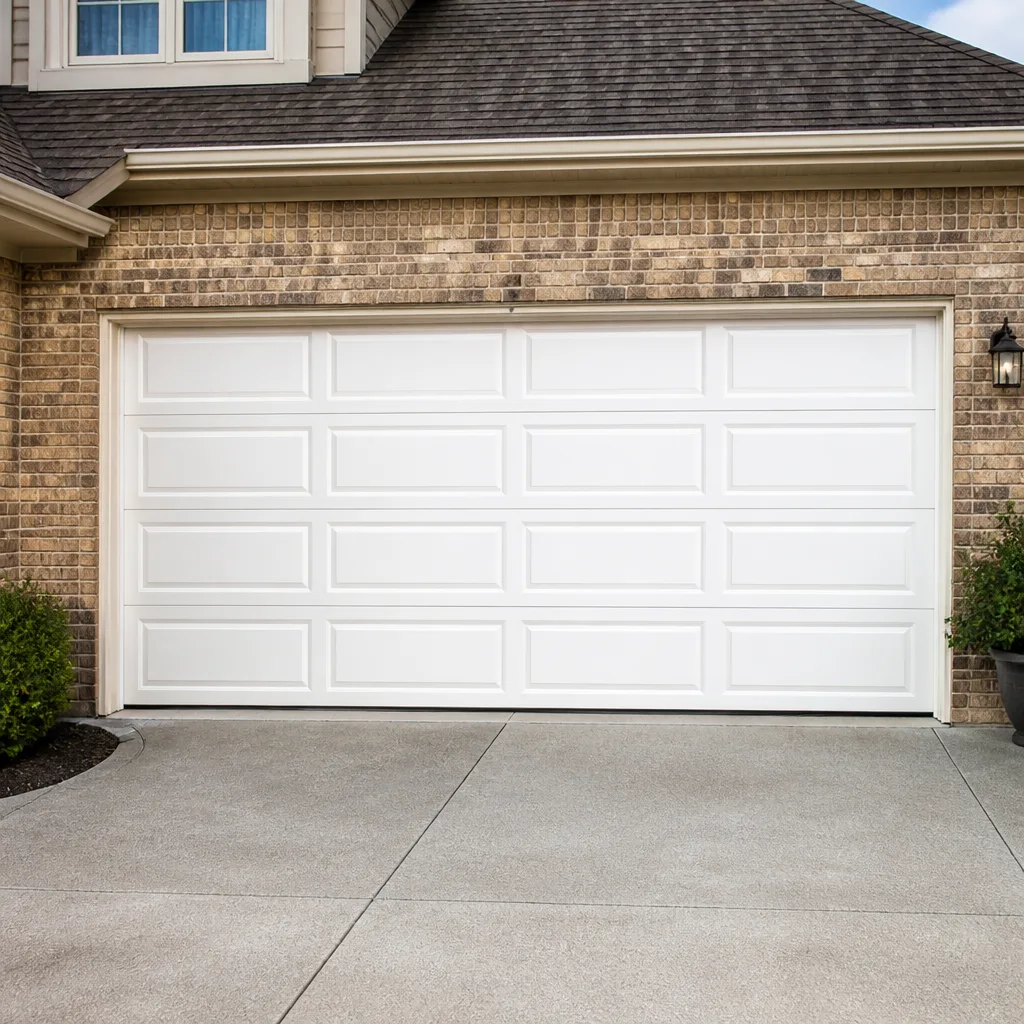 Raised-panel steel
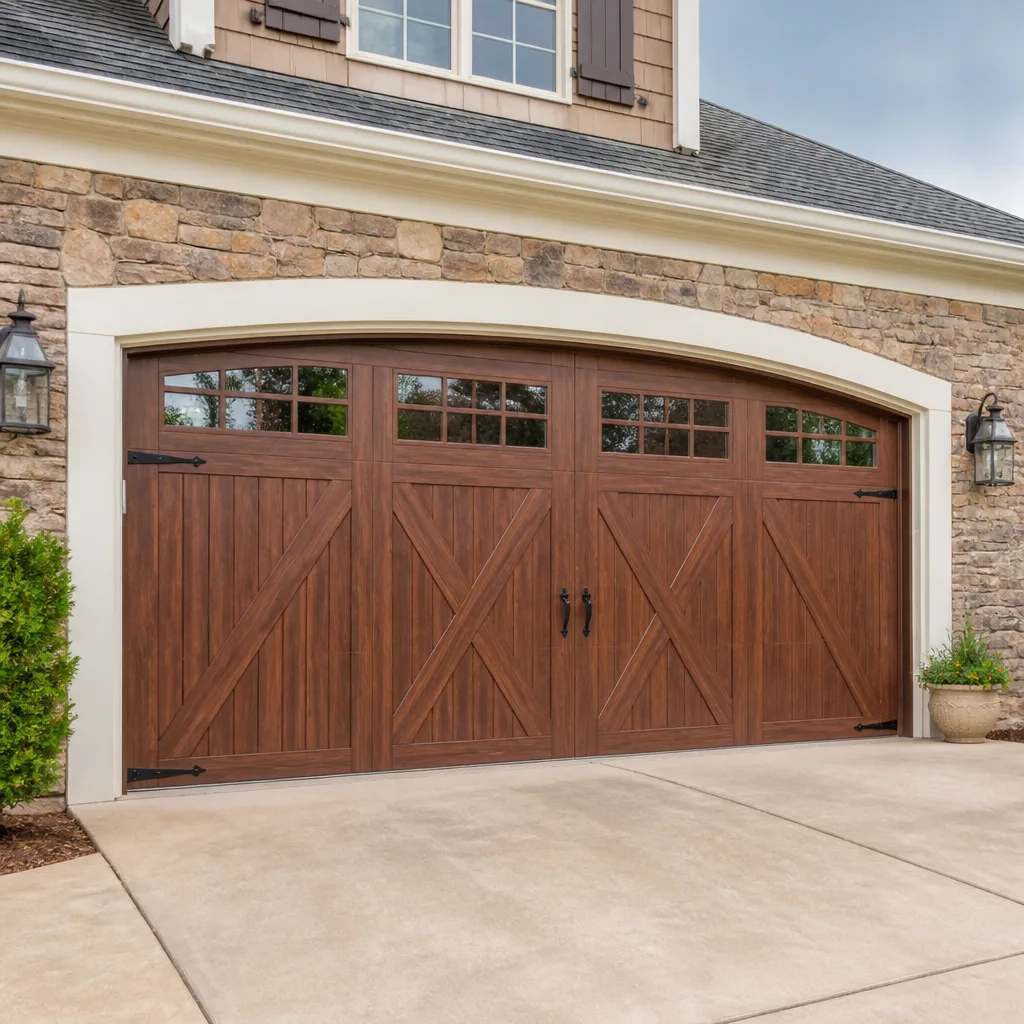 Carriage house
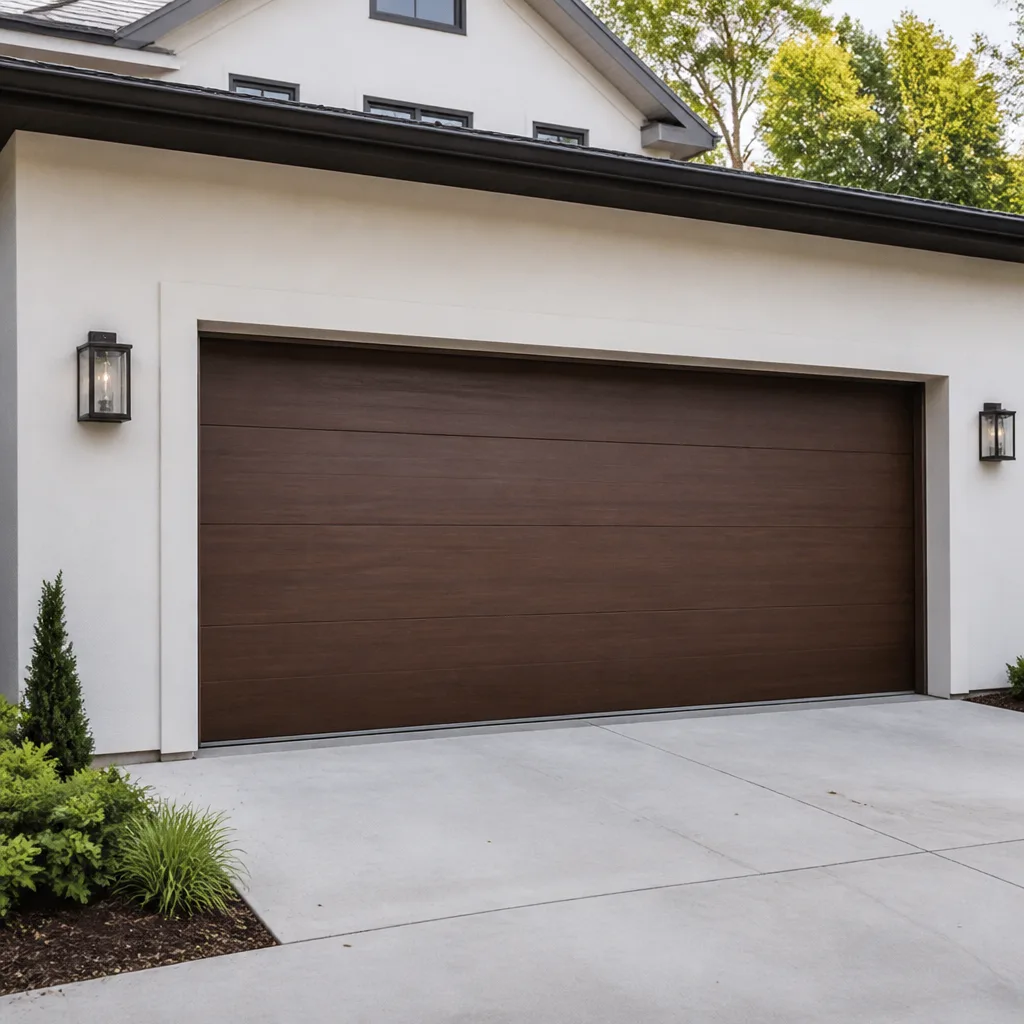 Modern flush
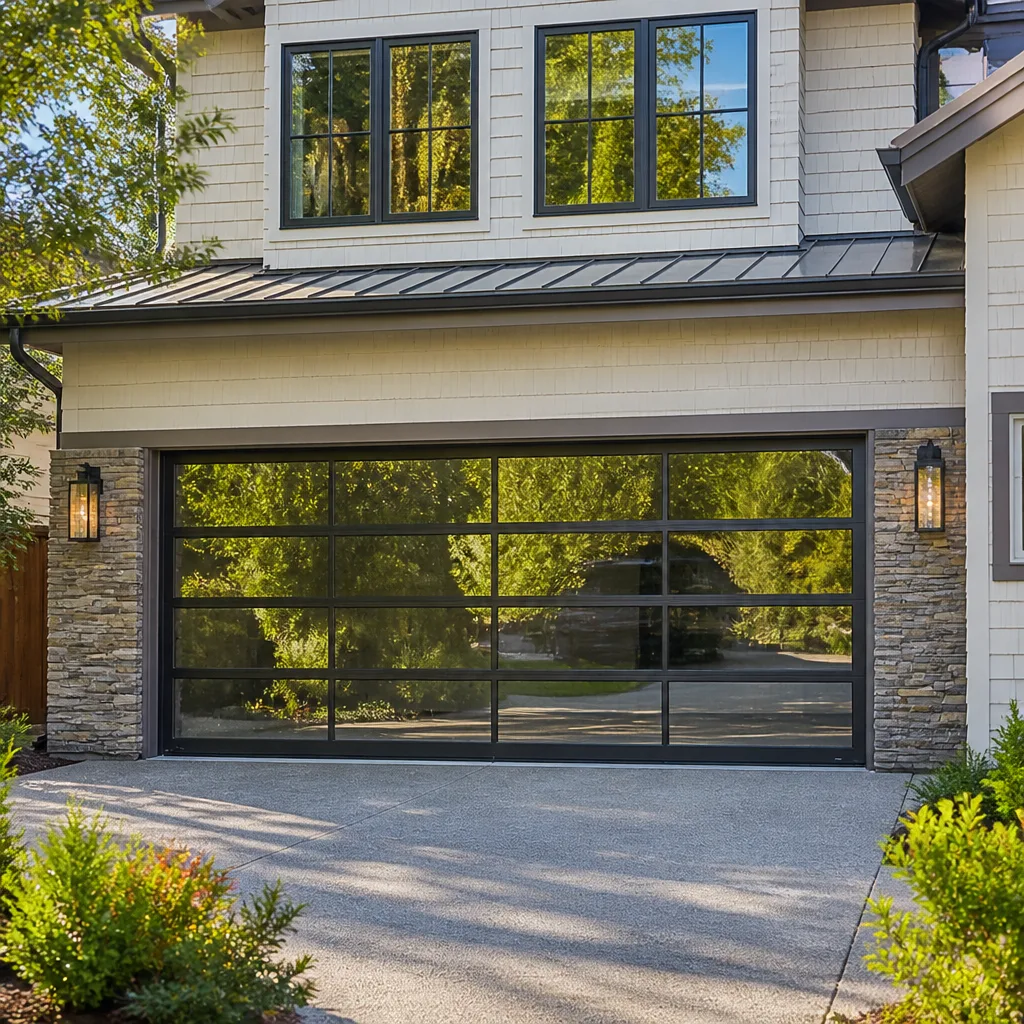 Full-view glass
 LiftMaster openers
 Chamberlain openers
Full 25-point door and opener safety check with every visit - springs, cables, rollers, tracks, and your LiftMaster or Chamberlain opener included
You get a price before we start. It does not change when the pro arrives.
Get your free estimateGarage Door Repair Maintenance Schedule: What to Do and When
Most garage door maintenance guides were written for four-season climates. They tell you to winterize, to watch for ice, to brace for the cold. In Edinburg, the schedule looks different. The real damage window here runs from May through September, when daily thermal expansion works on torsion springs, cables, and hardware hour after hour, and the seasonal wind events that sweep through the Rio Grande Valley test every anchor bolt and hinge. Plenty of homeowners don’t think about their door until something snaps. This guide lays out a month-by-month maintenance rhythm built around what actually degrades in Edinburg, TX, what you can safely check yourself, and what belongs in the hands of a trained technician.
Quick Answer
The right garage door maintenance schedule in Edinburg follows the local climate, not a generic annual reminder: check spring tension and lubricate moving parts in late spring before the heat peaks, inspect tracks, anchor bolts, and top-section reinforcement after high-wind events, and audit weather seals and balance in the milder winter months. Homeowners can handle visual checks and lubrication; spring tension calibration and cable wear assessment belong to a professional. A consistent schedule keeps small wear from turning into an emergency repair.
Styles & brands we work with
- Raised-panel steel
- Carriage house
- Modern flush
- Full-view glass
- LiftMaster openers
- Chamberlain openers
Table of Contents
- How the Edinburg Climate Changes Your Maintenance Calendar
- Your Month-by-Month Garage Door Maintenance Schedule
- What to Inspect Before and After High-Wind Season
- Homeowner Tasks vs. Professional Tune-Up Tasks
- How to Log Maintenance for Warranty and Resale
- What Maintenance Saves vs. an Emergency Repair
- Spring and Cable Safety: What Never to Touch
- Opener Maintenance: The Often-Forgotten Half
How the Edinburg Climate Changes Your Maintenance Calendar
Garage doors in Edinburg live under conditions that are nothing like what a northern maintenance guide assumes. Daytime highs through the summer push the steel and aluminum of your door through a wide expansion-and-contraction range, day after day, for months. That cycling works on the torsion spring, which is the component carrying most of the door’s weight, and it works on the cables, hinges, and rollers. Springs don’t stay at the same tension all year; the metal relaxes and tightens with temperature and with every open-close cycle.
The Rio Grande Valley also gets seasonal wind events that most maintenance checklists ignore altogether. When sustained wind hits a garage door, the load transfers straight into the track anchors, the hinges, and the joint between the top section and the header. A door that looks fine in calm weather can have a loosened anchor that only shows up as a rattle or a binding track. Building a schedule around the local calendar, rather than a generic “yearly service” reminder, is what keeps a door ahead of wear instead of behind it.
- Summer heat (May through September): the stress period for springs, cables, and opener motors that run in an unconditioned garage.
- Wind season: the stress period for tracks, anchor bolts, hinges, and top-section reinforcement.
- Milder winter months: the calm window for balance checks, seal audits, and lubrication that lasts.
If you’d rather hand the whole calendar off to a specialist, our garage door repair service covers the professional side of every item below.
Your Month-by-Month Garage Door Maintenance Schedule
Below is the rhythm we recommend for Edinburg homes. The exact month matters less than the sequence: get ahead of summer heat, respond after wind events, and use the cooler stretch for anything that needs calibration or replacement.
- March – pre-summer inspection. Before the heat settles in, look over springs and cables for wear, listen for a door that’s getting noisier, and check that the door balances when you lift it partway and let go. If spring tension has relaxed over the previous summer, this is the moment to reset it.
- April – lubrication and hardware check. Lubricate hinges, rollers, and the torsion bar ends, and tighten any loose hinge screws you can reach. Loose track anchor bolts are a sign the door has been carrying load it shouldn’t.
- May through September – watch-and-report months. These are the months when heat-related wear accelerates. Listen for new pops, squeaks, or a change in how smoothly the door moves. Don’t try to adjust spring tension yourself in this window; report changes and let a professional assess them.
- After any high-wind event – inspection. See the dedicated section below. This is not a calendar month so much as an event-triggered task.
- October – post-summer check. With the worst of the heat past, check the door’s balance again, look over cables for fraying, and confirm the safety reverse still works.
- November through February – seal audit and tune-up window. The milder months are when a professional balance and tension check goes furthest, and when worn weather seals are easiest to replace before the following summer.
- Ongoing – monthly quick check. Every month, just look and listen. Run the door once and note anything new.
The point of this calendar is timing, not busywork. Getting a tension check done in March, before Edinburg’s heat peaks, is worth more than doing the same check in August when the door is already under stress.
What to Inspect Before and After High-Wind Season
Wind is the maintenance factor most garage door checklists leave out, and it’s the one that most directly affects Edinburg homes. When wind pushes against a closed garage door, every bit of that force travels through the top section, into the hinges, and out through the track anchors bolted to your wall. Loose anchors, worn hinges, and a top section that isn’t reinforced take the full load. Homeowners who prepare for wind season find fewer rattles, fewer misaligned tracks, and fewer surprise repairs.
Before the season, run through this list:
- Track anchor bolts: check the bolts holding the vertical and horizontal tracks to the wall. A bolt that spins freely, or a track that wiggles when you push it, needs attention.
- Top section reinforcement: the top panel carries the most wind load. If the manufacturer offers a reinforcement strut, having one installed makes a real difference in high-wind areas.
- Hinges and rollers: worn hinges rattle and let the panels move out of alignment. Worn rollers make the whole door bind.
- Weather seals: a bottom seal that’s torn or a perimeter seal that’s shrunk lets wind and heat driven debris past the door.
After a wind event, check the same items again, plus a visual for any panel that has been pushed or dented out of line. If your door binds, rattles, or sits unevenly after a windy stretch, that is usually a track or anchor issue, not a spring issue, and it’s worth having a professional look at it rather than waiting. We work on doors from major manufacturers including Clopay and Wayne Dalton systems, so the reinforcement parts are matched to what’s actually on your home.
Homeowner Tasks vs. Professional Tune-Up Tasks
There’s a clear line between what a homeowner can do safely and what needs a trained technician. Getting that line right is the single most important habit in a maintenance schedule, because most serious injury on a garage door happens when someone crosses it. Below is where the line sits.
Safe homeowner tasks
- Visual inspection of springs, cables, and tracks
- Lubricating hinges, rollers, and torsion bar ends with a suitable garage door lubricant
- Tightening loose hinge screws with a hand screwdriver
- Testing the safety reverse feature
- Cleaning the tracks and wiping down the door
- Listening for new sounds and noting them in a maintenance log
Professional tune-up tasks
- Spring tension calibration (adjusting a torsion spring is genuinely dangerous – see the safety section below)
- Cable wear assessment and cable replacement
- Replacing worn springs, hinges, and rollers
- Balance and travel calibration of the door
- Anchor bolt and track alignment corrections
- Opener force and limit calibration
If your visual check turns up a frayed cable, a spring with a visible gap, or a door that won’t hold its balance, stop using the door and have a technician out. The right fix, not the fastest workaround, is what keeps a door safe.
How to Log Maintenance for Warranty and Resale
A maintenance log is one of the least glamorous parts of owning a garage door, and one of the most useful. Two situations where a written record pays off: a warranty claim on a spring, opener, or door panel, and a resale disclosure when you sell the home. Most manufacturers ask for evidence of routine maintenance before honoring a warranty on a failed component, and buyers ask about service history on the garage door just as often as on the roof or HVAC.
You don’t need a complicated system. A folder, a notes app, or a spreadsheet all work. Just capture these items for every service:
- Date of the inspection or service.
- What was checked or replaced, with part names (for example, torsion spring, bottom seal, hinge).
- Who performed the work – the company name and the technician if you have it.
- Cost and a copy of the invoice.
- Notes on anything the technician flagged for a future visit.
For the brand on each component – opener, door panel, springs – note it too. If your opener is a LiftMaster or Chamberlain unit, noting the model helps when a future service call needs a specific part. If you’re handing the door to a new owner, the log becomes a selling point in a market where buyers are cautious. The same habit helps if the door develops a pattern: three hinge adjustments in a year tells a very different story than one.
What Maintenance Saves vs. an Emergency Repair
Garage door repairs are one of the few home maintenance items where you can genuinely see the return on a recurring schedule. An emergency repair costs more than the same repair done as routine maintenance, because the emergency involves a failed part plus whatever else the failure took with it. A snapped torsion spring, for instance, often damages cables or bends a track on the way out. A worn hinge caught early is a hinge replacement. A worn hinge that finally fails can take a panel with it.
The table below compares the typical cost of the routine option with the emergency it usually prevents. These are typical estimated ranges for the Edinburg area, not exact prices. Your written estimate sets the final price, and we quote before any work begins.
- Routine professional tune-up (spring tension check, lubrication, balance, safety reverse): typical cost is modest and covers several items at once.
- Single torsion spring replacement (emergency): typically the largest single-component emergency bill most homeowners see.
- Matched spring pair replacement: usually done together, at roughly double the single-spring figure.
- Cable replacement: typically priced per cable, plus the labor to rebalance the door.
- Track alignment and anchor correction: priced per track, more if the panel has been bent.
- Opener motor or gear replacement: varies by brand and model; Craftsman and Genie units both come through our garage door opener repair service regularly.
The math is straightforward: the cost of keeping the schedule is nearly always less than the cost of one emergency repair, and it avoids the disruption of a door stuck open when you need to leave. If you’d rather skip the calendar entirely, we can quote a tune-up so you know the number before you commit. Call (866) 389-4630 for a free estimate – we quote the work and you approve it before anything starts.
Spring and Cable Safety: What Never to Touch
This is the part of the guide to take seriously. Torsion springs and the cables that run beside them are under very high tension even when the door is fully closed. The spring stores the energy that lifts the door; when it releases suddenly, the force is enough to cause serious injury. A cable under tension can whip when it’s cut or slips. This is not a “be careful” warning – it’s the reason spring and cable work belongs to a trained technician, full stop.
The safe habit is to look, listen, and report. A spring that shows a visible gap, a cable that looks frayed or shows kinks, or a door that won’t hold its balance are all reasons to call a professional rather than adjust anything. Never try to wind or unwind a torsion spring, never cut a cable, and never prop a door open and work under it without knowing the spring is supported. Homeowners who touch springs usually do it because they want to save a repair bill; the resulting injury or the damaged door costs far more than the repair would have. Our technicians have up to experience with these systems, and the right call is to let them handle it.
Opener Maintenance: The Often-Forgotten Half
Most maintenance guides focus entirely on the door and forget the opener, which is doing its own work on every cycle. The opener carries the motor, gears, and force sensors that start and stop the door. In Edinburg’s summer heat, an opener running in an unconditioned garage works harder, and force sensors drift more easily than homeowners expect. If the door starts reversing on its own, stops halfway, or the remote only works when you’re close, the opener is usually involved.
Homeowner-safe opener tasks include testing the safety reverse (place an object under the door and confirm it reverses), checking that the remote batteries are fresh, and listening for grinding or humming that wasn’t there before. Professional tasks include force and limit calibration, gear and motor inspection, and replacing worn drive components. If your opener is a LiftMaster or Chamberlain, both are common in the Valley and both benefit from a calibration check once a year. The opener is a specialized piece of equipment, and treating it as its own service – rather than lumping it into vague general repair – catches problems before they strand the door.
Common Mistakes to Avoid
- Skipping the pre-summer check. The most valuable month on this calendar is the one before the heat peaks. Waiting until a spring fails in July costs more and disrupts more.
- Lubricating with the wrong product. Household oil and WD-40 attract dust and gum up rollers. Use a garage door lubricant designed for the job, and use it sparingly.
- Ignoring wind-season hardware. A rattling track after a windy stretch is usually an anchor bolt issue. Waiting on it lets the track wear the door’s alignment.
- Adjusting the spring yourself. This is the single most dangerous shortcut in garage door maintenance. Springs stay under tension even when the door is closed.
- Never logging anything. Without a record, warranty claims get harder and resale questions go unanswered. A five-minute log entry protects both.
- Patching a frayed cable. A cable in that condition needs replacement, not a repair. It’s a safety item, not a cosmetic one.
- Assuming the door is fine because it opens. A door that opens without complaint can still have a relaxed spring, worn hinges, or a loose anchor. That’s why the calendar exists.
See the difference
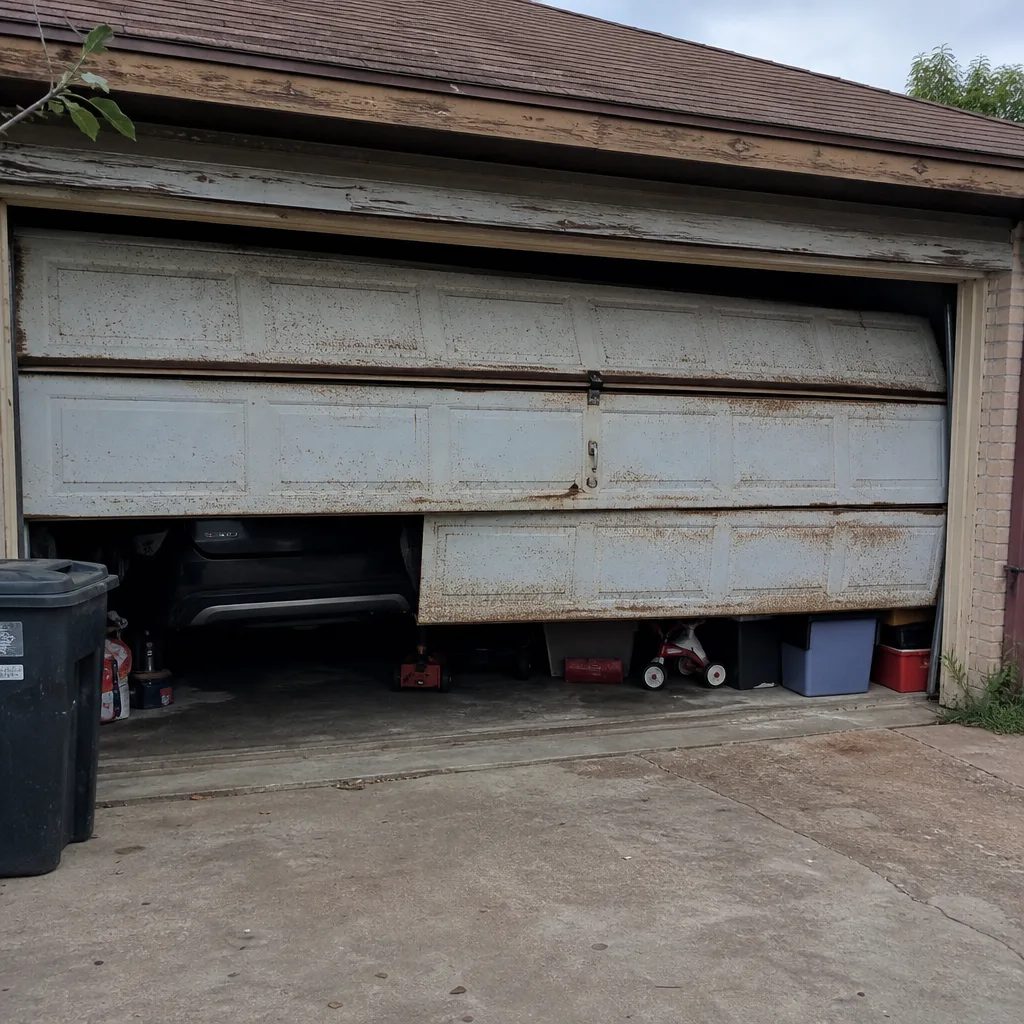 Before
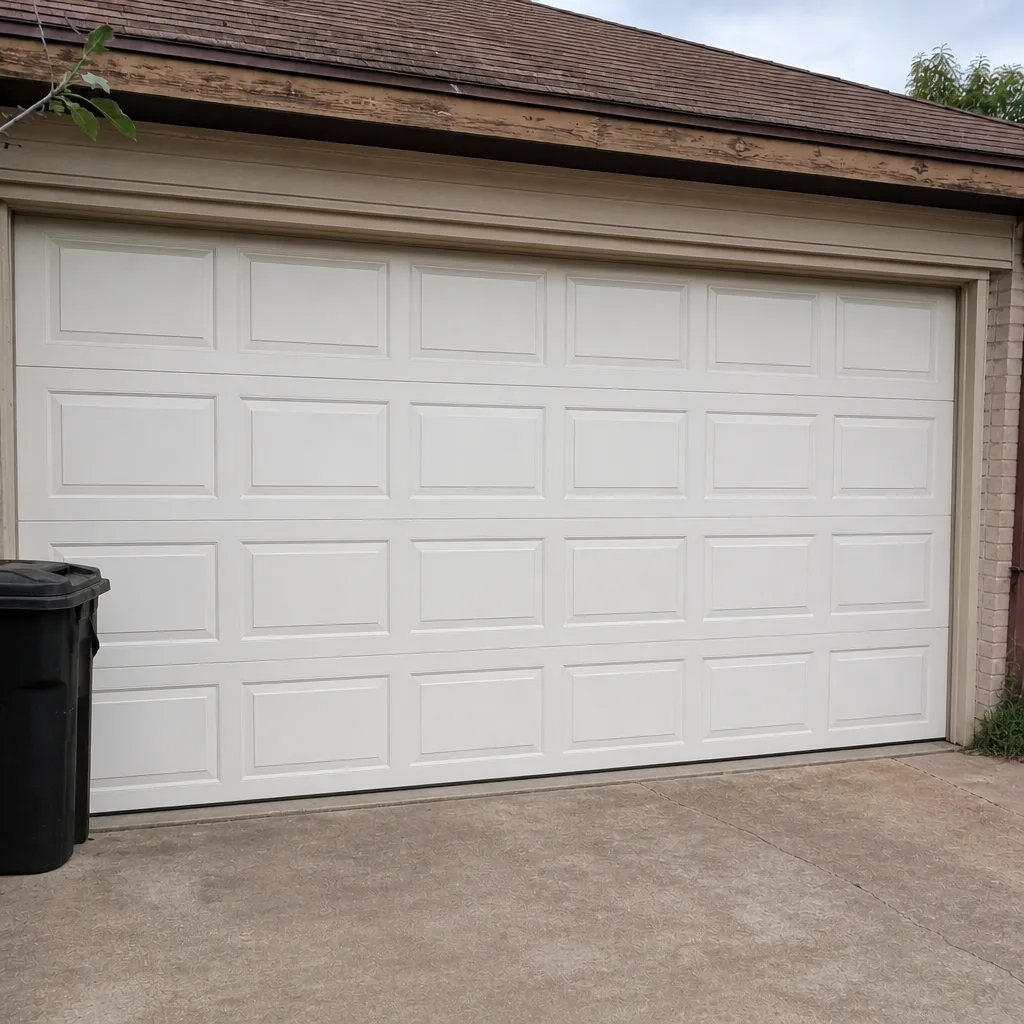 After
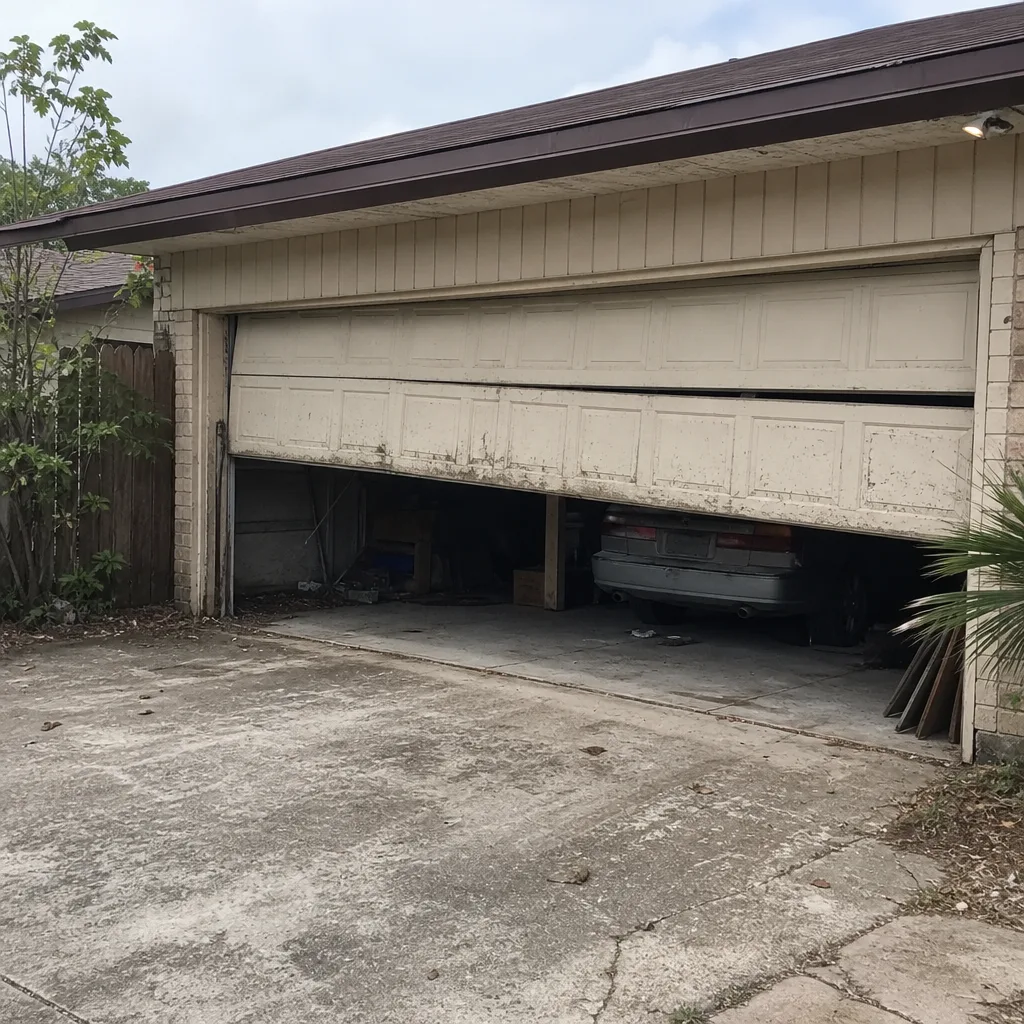 Before
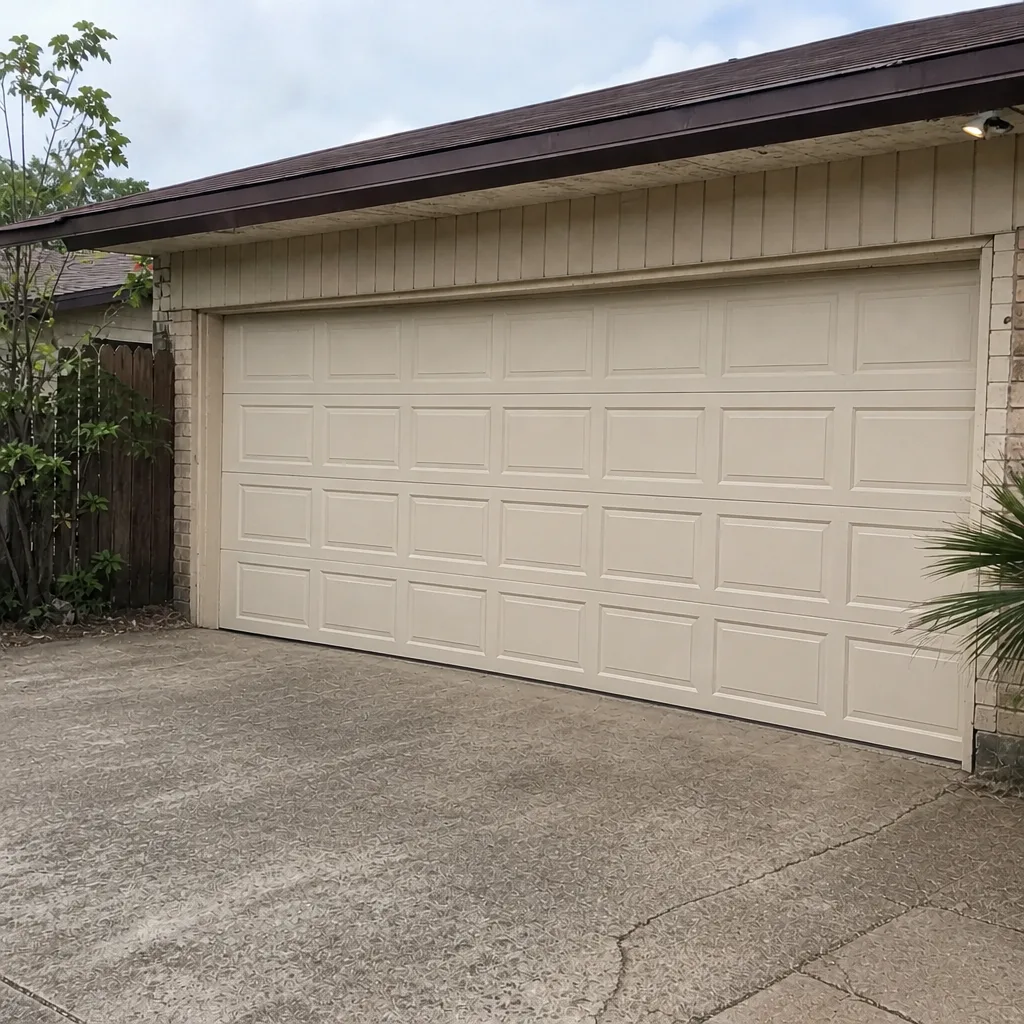 After
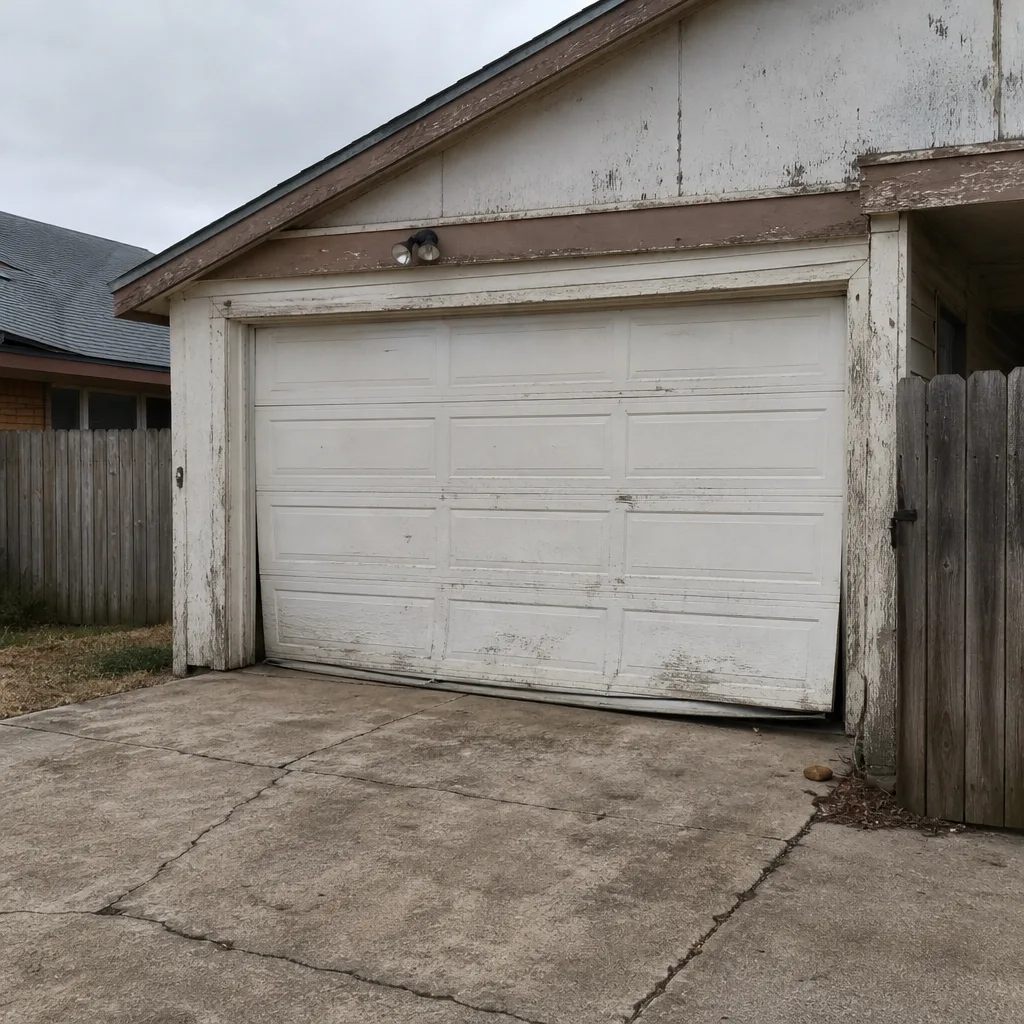 Before
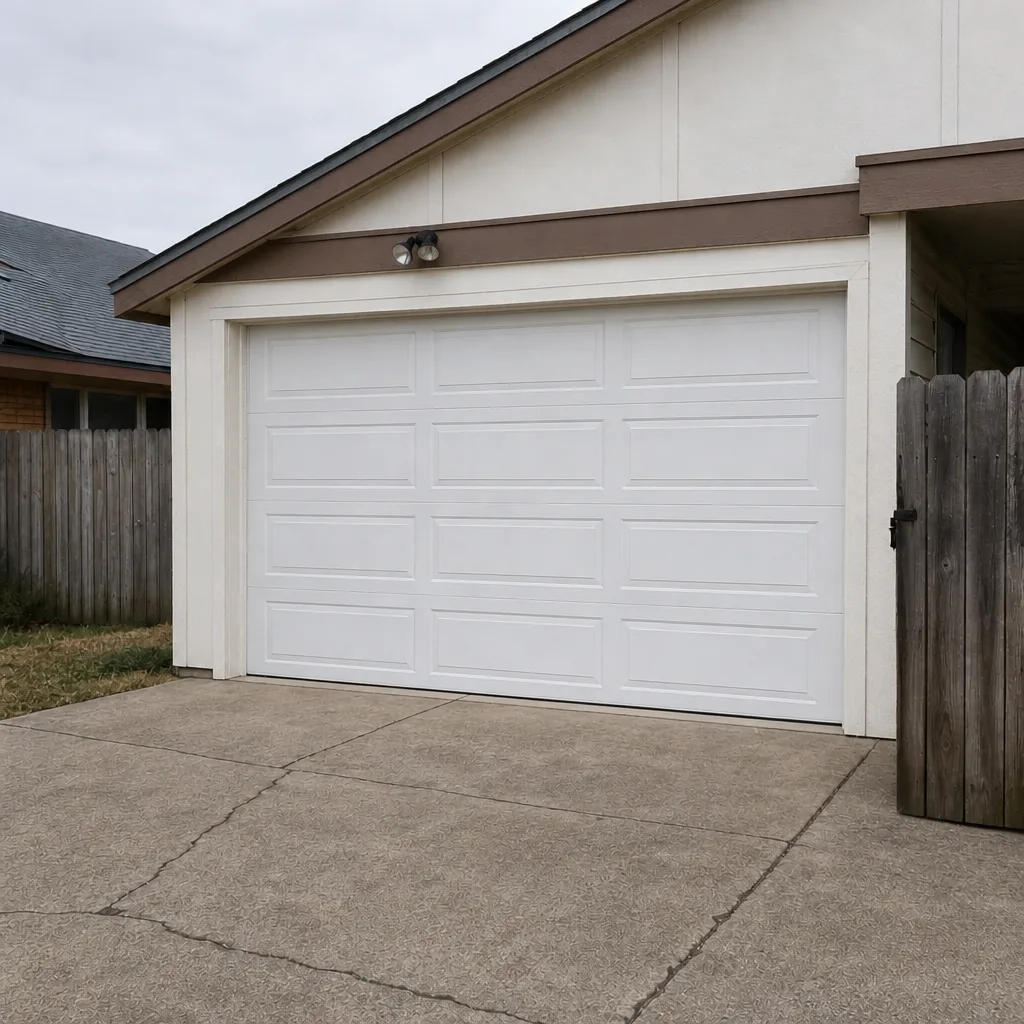 After
When to Call a Professional
Call a professional whenever the answer involves a spring, a cable, or a door that won’t balance or close properly. Specific triggers: a snapped or relaxed spring, a frayed or kinked cable, a door that reverses without obstruction, a door that binds within the tracks, rattling or misalignment after wind, or an opener that grinds, hums, or stops short. Visual checks and lubrication are fine to handle yourself; anything that involves tension or alignment is not. Covenant Garage Door Repair offers free estimates in Edinburg – call (866) 389-4630. We answer 24/7, and fast dispatch runs from 7am to 7pm, Sunday through Friday.
Frequently Asked Questions
Once a year at minimum, with a shorter rhythm around the local climate: a pre-summer tension and lubrication check in late spring, an inspection after any high-wind event, and a balance and seal check in the milder months. Monthly homeowner checks fill in the gaps.
No. Torsion springs are under high tension even when the door is closed, and releasing that tension wrong can cause serious injury. Spring replacement is a technician job. If a spring is relaxed or shows a gap, stop using the door and call us at (866) 389-4630.
Check the track anchor bolts for looseness, hinges for rattle, the top section for dents or misalignment, and weather seals for tears. If the door binds or the track wiggles, that’s an alignment issue and worth a professional look.
Any change in how the door sounds or moves is a signal to schedule one. A louder pop, a door that doesn’t balance, a reversing opener, or three hinge adjustments in a year all point to a tune-up. A pre-summer check in late spring covers the same ground before the heat arrives.
In our experience it does, because routine maintenance catches a worn part before it fails and takes other parts with it. An emergency repair (a snapped spring, a bent track) nearly always costs more than the routine tune-up that would have caught it. The written estimate sets the final price on any repair.
Yes. Opener repair is its own discipline for us, so a tune-up can include a force and limit check at the same visit. If you’re in Edinburg, call (866) 389-4630 and tell us the door and opener brands – we work on LiftMaster, Chamberlain, Genie, Craftsman, and Raynor systems, among others.
The Bottom Line
In Edinburg, garage door maintenance is a calendar question, not a yearly reminder. Get the pre-summer tension check done in late spring, keep an eye on hardware through wind season, use the milder months for balance and seal work, and log everything you spend. Homeowners handle visual checks and lubrication; springs, cables, and alignment belong to a technician. A steady schedule catches wear while it’s still small, keeps the door quiet, and protects the resale story attached to your home. It’s the same reason our name is a promise – we stand behind the schedule and the work that comes with it. We’re Covenant Garage Door Repair, garage doors are all we do, and the written estimate sets the price before any work begins.
Ready to put a real maintenance schedule in place? Call (866) 389-4630 for a free estimate. We answer 24/7. Fast dispatch from 7am to 7pm, Sunday through Friday.
Written by the team at Covenant Garage Door Repair.