
Last updated November 15, 2026
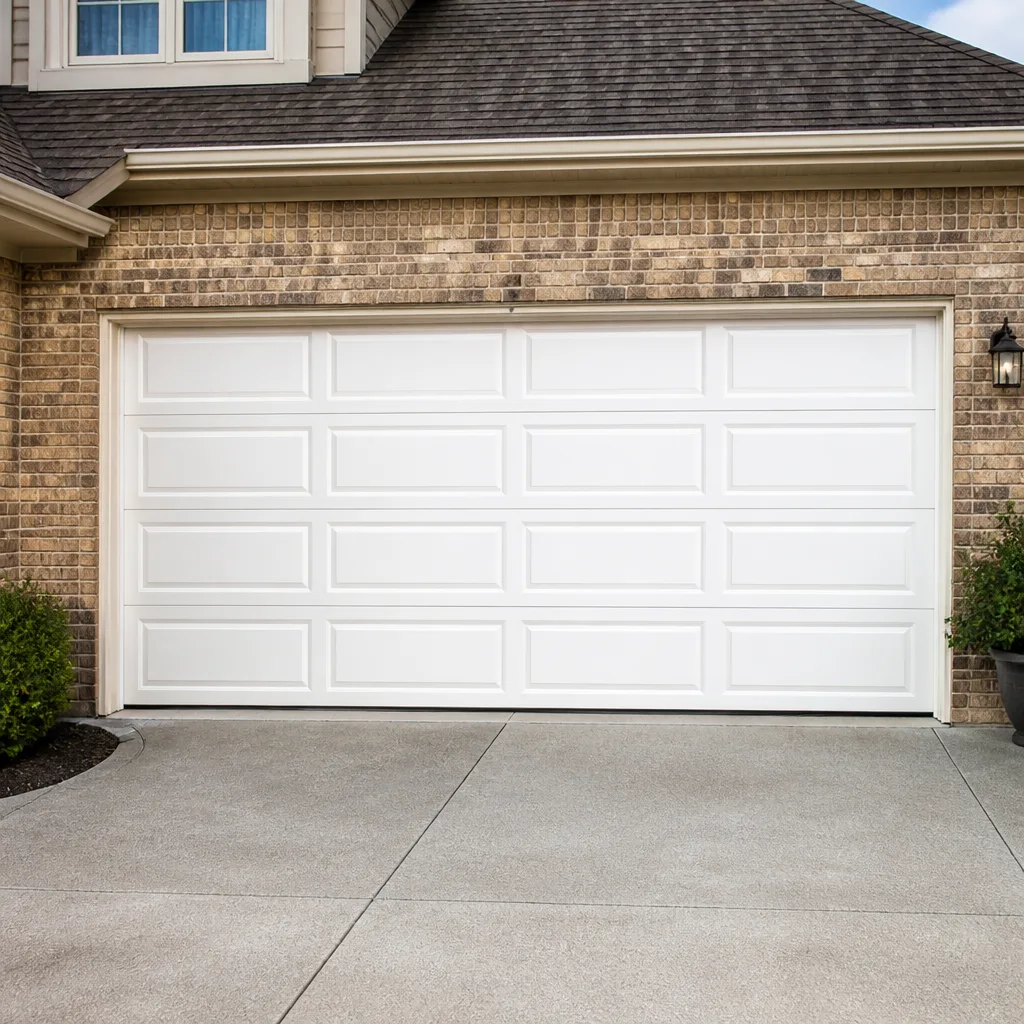 Raised-panel steel
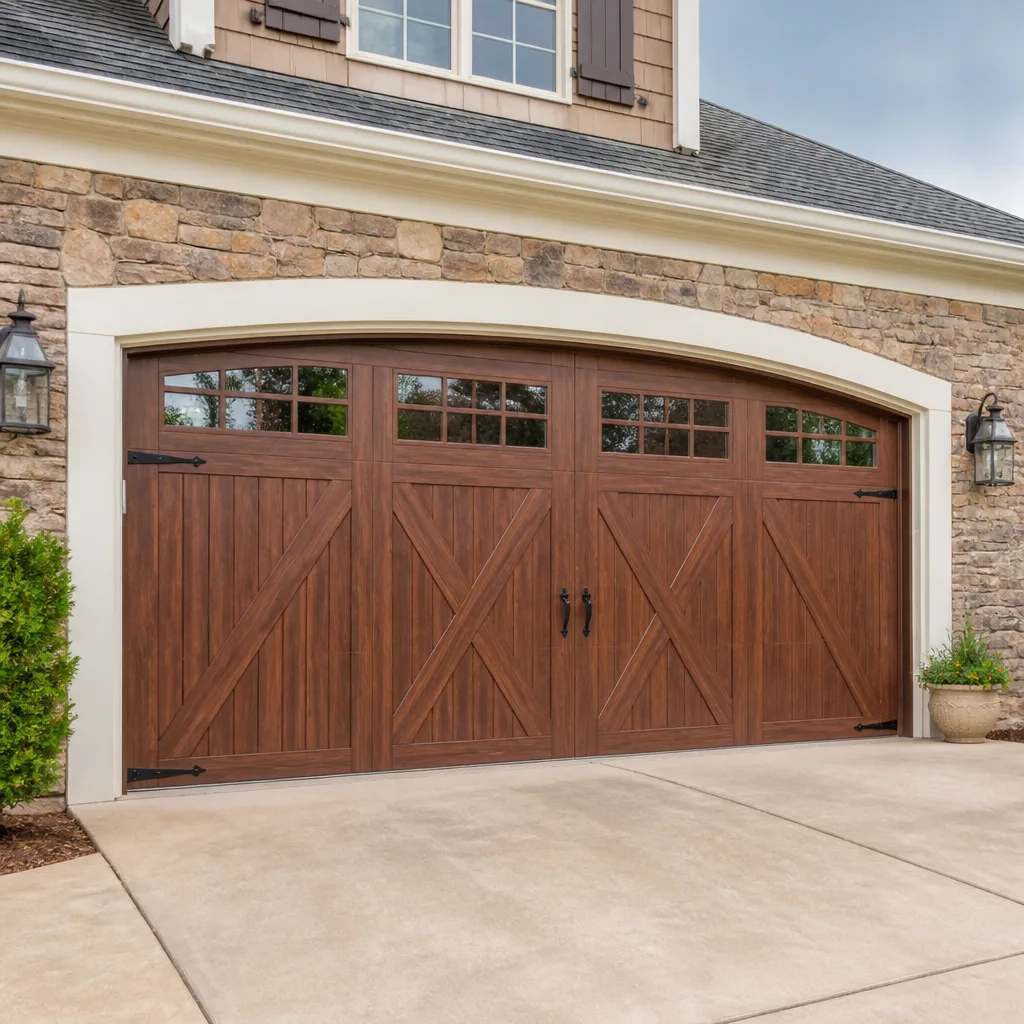 Carriage house
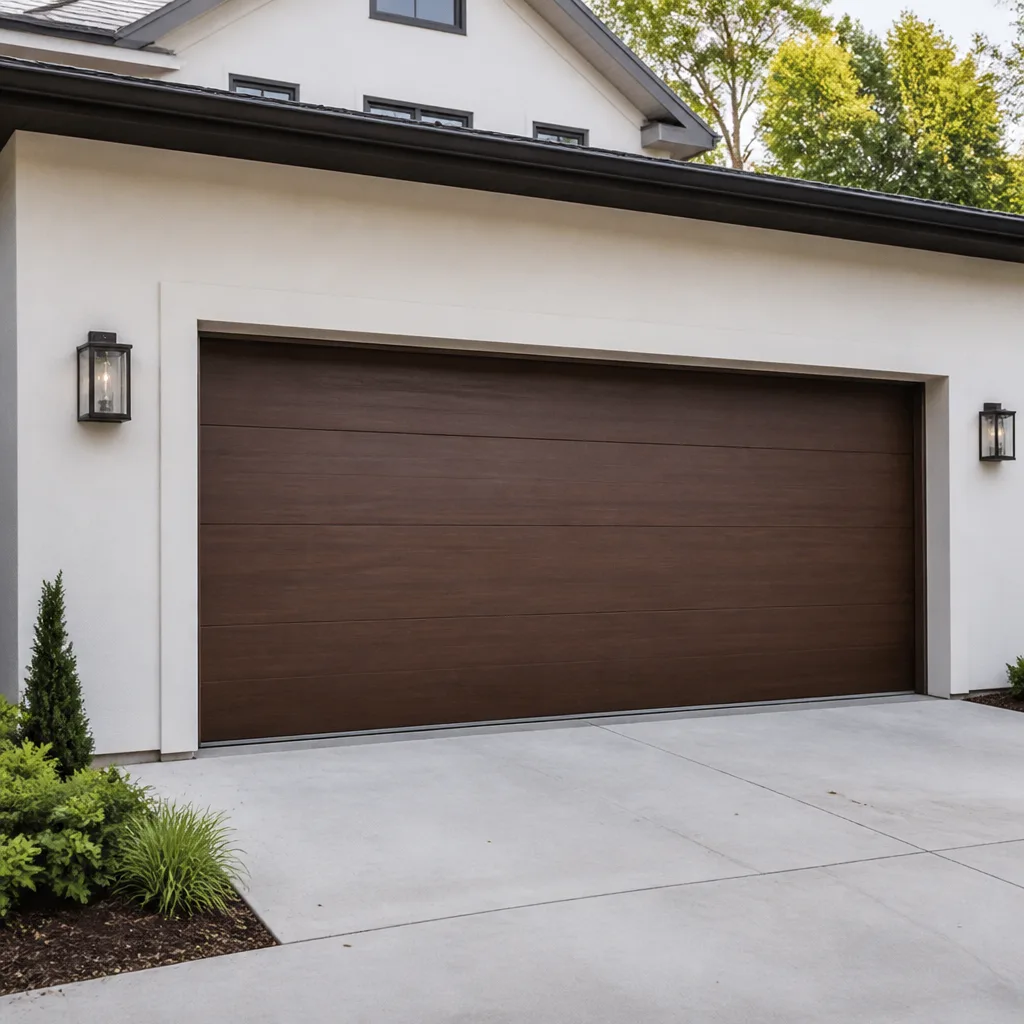 Modern flush
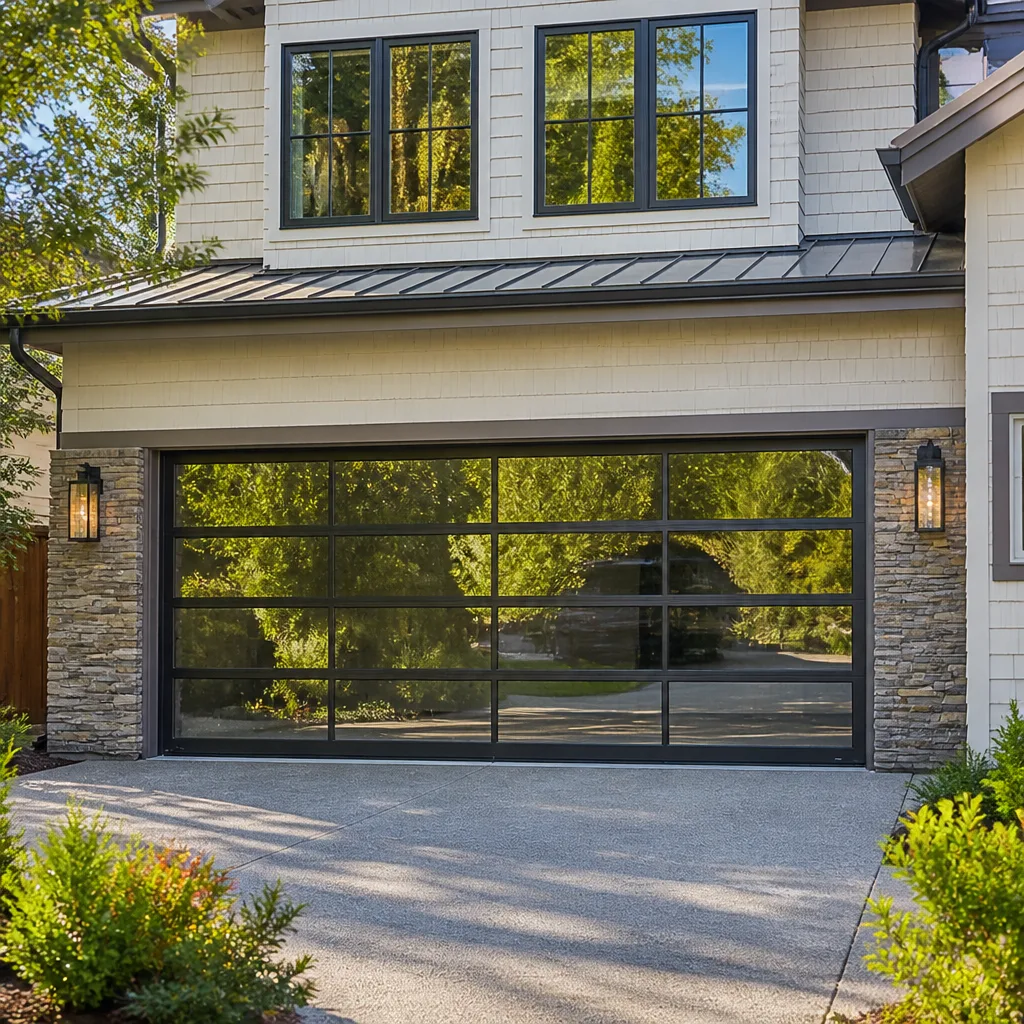 Full-view glass
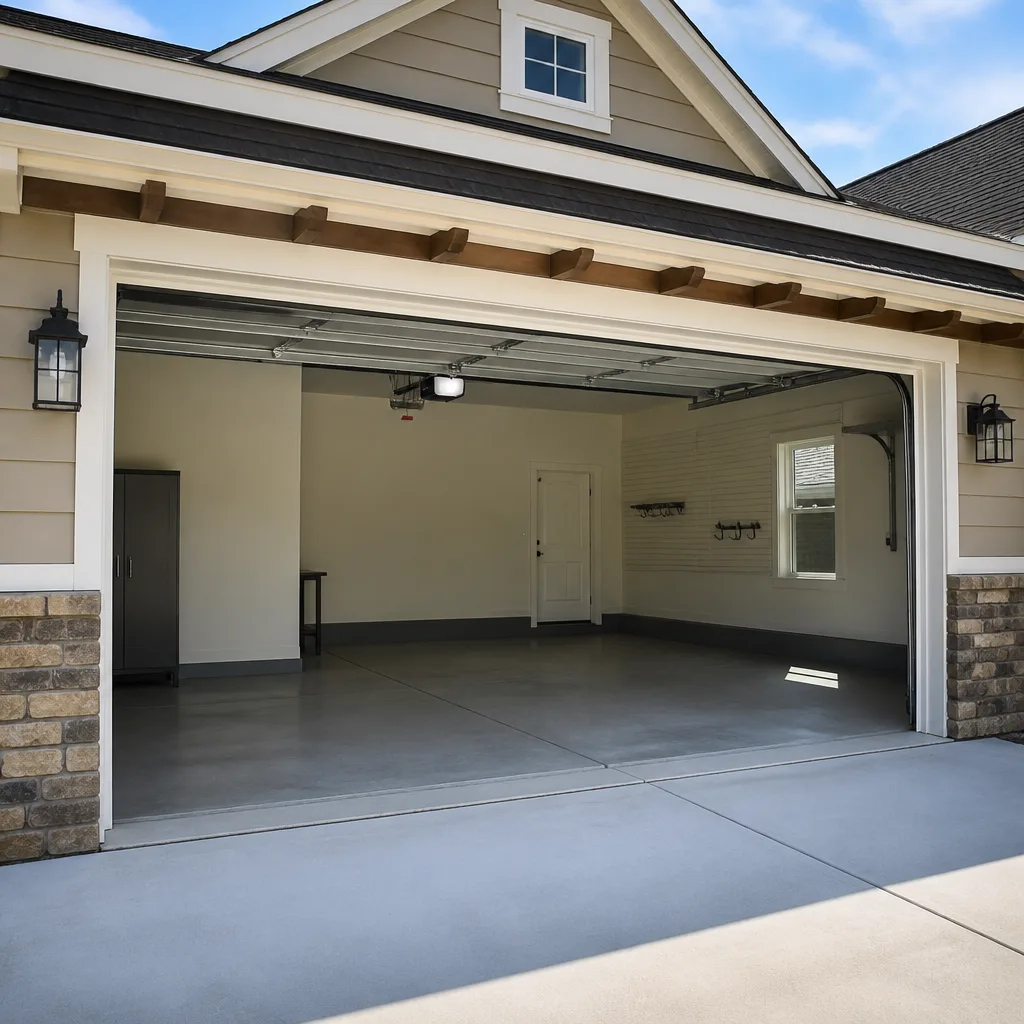 LiftMaster openers
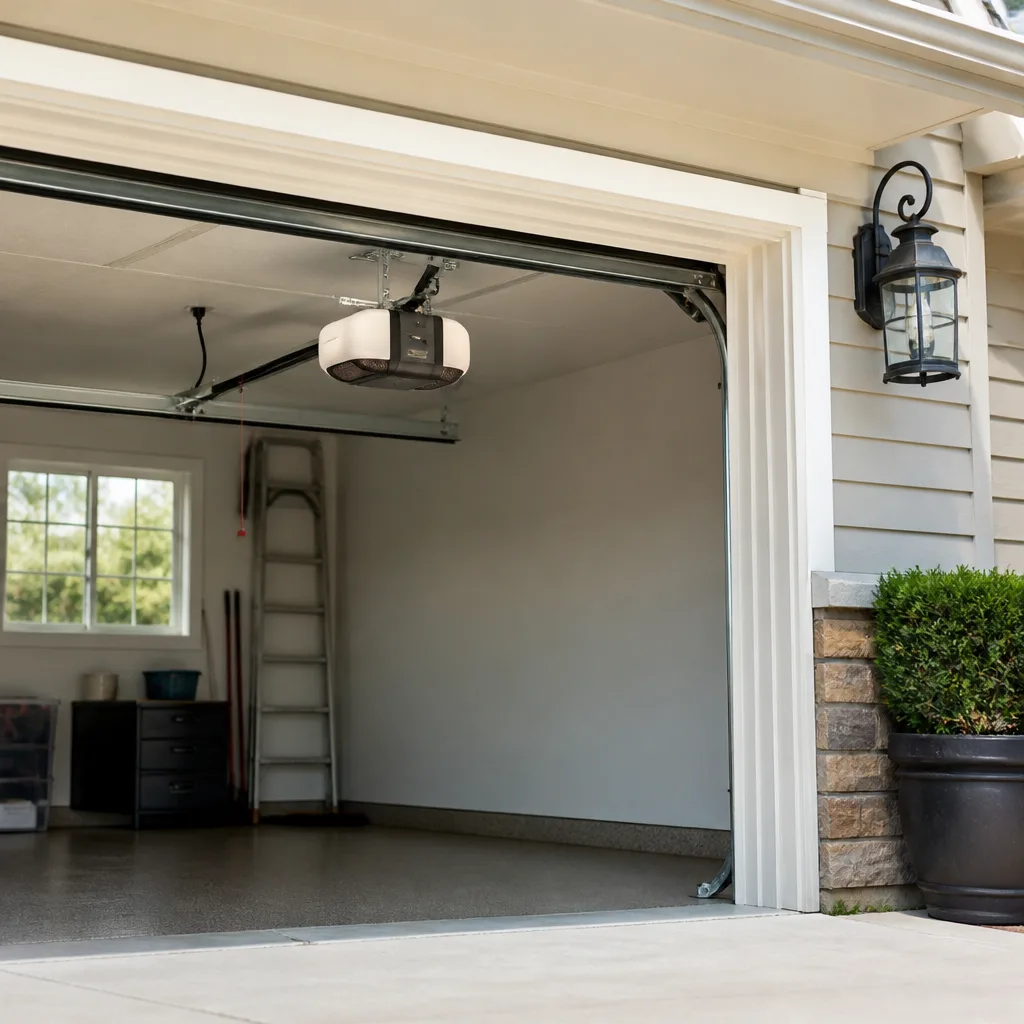 Chamberlain openers
Full 25-point door and opener safety check with every visit - springs, cables, rollers, tracks, and your LiftMaster or Chamberlain opener included
You get a price before we start. It does not change when the pro arrives.
Get your free estimateSeasonal Garage Door Care for Edinburg: Year-Round Homeowner’s Guide
Most garage door advice online is written for a place with four even seasons, and Edinburg doesn’t have those. What we have is a long, punishing summer, a short winter that occasionally bites hard, and two shoulder periods that each stress the door in their own way. That imbalance is why a national maintenance checklist can leave you unprepared for the problems this climate actually creates. Winter is the season Edinburg homeowners skip, yet a single hard freeze can crack a dry bottom seal, seize a neglected hinge, or push a tired opener past its cold-start limit. This guide walks through what to check in each part of the year, what tends to break when maintenance gets skipped, and how to build a task calendar that fits Edinburg weather instead of a generic template.
Quick Answer
Seasonal garage door care in Edinburg means shifting your attention with the weather rather than following four equal quarters: watch opener heat and UV wear through the long summer, tighten up seals, hinges, and lubrication before the brief winter freeze, clear tracks and inspect cables after dust storms and high winds, and check weatherstripping and panel seams after the rainy season’s humidity swings. A light inspection and lubrication pass a couple of times a year, plus a professional tune-up when something sounds or moves differently, prevents most of the failures we see.
Styles & brands we work with
- Raised-panel steel
- Carriage house
- Modern flush
- Full-view glass
- LiftMaster openers
- Chamberlain openers
Table of Contents
- Why Edinburg’s Climate Doesn’t Fit a Four-Season Checklist
- Summer: Heat, UV, and Spring Tension
- The Pre-Freeze Checklist for Edinburg’s Short, Sharp Winter
- Dust Storm and High-Wind Aftermath Inspection
- Rainy Season Humidity and What It Does to Panels and Seals
- A Realistic Annual Task Calendar for Edinburg
- What You Can Safely Check Yourself vs. What Needs a Technician
- When to Call a Professional
Why Edinburg’s Climate Doesn’t Fit a Four-Season Checklist
If you pull up a garage door maintenance guide from a national brand, it will tell you to prepare for winter in November and to check for salt and rust in spring. Neither really fits here. Edinburg spends most of the year in heat, gets a handful of genuinely cold nights in winter, and sees blowing dust, high wind, and heavy rain at different points in the calendar. The mechanical stress on a door follows those patterns, not the calendar on a poster.
In our experience, the doors that fail here tend to fail in predictable, climate-linked ways. Summer heat expands metal and stresses opener electronics. Dust and grit work into tracks and rollers. The brief winter freeze catches seals and hinges that dried out over the long warm months. None of that lines up with a standard quarterly checklist, which is why we wrote this around what actually happens in the Rio Grande Valley.
It helps to think about the year in five rough phases rather than four seasons:
- Deep summer – sustained heat and intense UV, hardest on openers and panel finish
- Storm season – wind, dust, and heavy rain events that stress tracks, cables, and weatherstripping
- Cool-down – the window to get seals and moving parts ready before cold nights
- Winter cold snaps – brief but sharp, when dried-out parts fail
- Warm-up – a check for what the cold and rain left behind
Each phase asks something different of the door. If you’re already dealing with a problem the door has had for a while, garage door repair is the place to start rather than waiting for the next season to make it worse.
Summer: Heat, UV, and Spring Tension
Summer is the longest and most demanding stretch for a garage door in Edinburg, and it stresses three things at once: the opener, the panels, and the springs. Understanding each helps you know what to watch for.
The opener under heat stress
An opener works harder in sustained heat. The motor runs warmer, and the electronic boards inside a unit like a LiftMaster or Chamberlain can struggle when the garage itself stays hot for weeks. A garage with a west-facing door and little ventilation gets especially warm in the afternoon. What to check: whether the opener sounds labored, whether it reverses for no clear reason, and whether the light or remote behaves intermittently. Those small glitches often show up first in summer. If they persist, dedicated garage door opener repair is worth a call before the board fails outright.
UV exposure on panels
If your door faces the afternoon sun, the finish on steel panels takes a beating through the long hot months. Paint can chalk or fade, and seams collect heat. A yearly wash and a check for dull or chalky patches tells you when the finish needs attention. Keeping the surface clean and, where the manufacturer allows, protected slows the UV wear. This is a simple look-over, not a repair.
Spring tension shifts
Torsion and extension springs are steel, and steel expands in heat. That expansion shifts the tension slightly, and a door that ran smoothly in cooler weather can feel heavier or run a little rough at the height of summer. A door that suddenly feels heavy is a sign the spring is doing less of its job, not a sign to force it. Springs are one of the most dangerous parts of the whole system to touch, so this is a check-and-call situation, not a do-it-yourself one.
- Listen for labored opener sound or unusual humming
- Note any intermittent remote or light behavior
- Wash the door and check panel finish for chalky or faded areas
- Note whether the door feels heavier or runs rougher than in cooler months
The Pre-Freeze Checklist for Edinburg’s Short, Sharp Winter
Edinburg winters are mild, but “mild” doesn’t mean uneventful. Once or twice a year the temperature drops hard enough to matter, and the damage always lands on parts that went unchecked all year. The freeze itself isn’t the problem – the neglect before it is. A dried-out bottom seal, a hinge that hasn’t seen lubrication since last winter, or an aging opener set to a low force limit can all give out on a cold morning.
What breaks when it was ignored, and what to check before the cold arrives:
- Bottom seal – a stiff, dry seal can crack in a hard freeze. Run your hand along it and look for cracks or brittleness now, not when it’s cold.
- Hinges and rollers – neglected hinges seize. A few drops of proper garage door lubricant on hinges, rollers, and the spring coils before winter keeps them moving.
- Opener cold-start – a low-quality or aging opener set near its force limit may not have the power to start the door cold. A Genie or Raynor unit well inside its limits usually does fine; a worn one may not.
- Weatherstripping – check the perimeter seal and stop molding for gaps or hardening. Cold makes brittle material crack.
- Door balance – open the door halfway by hand (with the opener disengaged) and see if it stays put. A door that drifts down is out of balance and harder for the opener to move in cold weather.
Doing this in the fall means the cold snap is a non-event. Skipping it means the first cold morning is when you find out. If something on this list is already failing, schedule Covenant Garage Door Repair before the cold arrives rather than after.
Dust Storm and High-Wind Aftermath Inspection
The Valley gets blowing dust and strong wind events that most garage door guides never mention. Grit is one of the quiet causes of wear. It settles on the track, works into rollers and hinges, and turns a smooth-running door into a noisy one. After a dust storm or a strong wind, a short inspection saves you a bigger problem later.
What to look for:
- Tracks – wipe out grit and check that the rails are still perfectly parallel. Wind can nudge a track out of alignment, which causes the door to bind or scrape.
- Cables – look for fraying, kinked spots, or slack. Cables under tension are dangerous to handle, so note anything that looks wrong and leave it to a technician.
- Weatherstripping – check perimeter seals for tears or sections pulled loose at the edges.
- Panel alignment – glance at the door from inside; a bent panel or a popped hinge often shows after a wind event.
- Rollers – a quick listen for grinding after the dust passes tells you whether grit got into the rollers.
A quick visual pass after a storm, and a wipe-down of the tracks, keeps grit from turning into a repair. Anything involving cables or a track that looks pushed out of line should be left to a professional.
Rainy Season Humidity and What It Does to Panels and Seals
The rainy season brings a different kind of stress: swings in humidity. Steel and wood-composite panels respond to moisture differently, and the seals around the door take the brunt of it. During a stretch of rain, humidity inside the garage rises, and the door’s seals and joints absorb that moisture. When it dries out again, materials contract.
What that means in practice:
- Steel panels – rust risk climbs at seams, scratches, and the bottom edge where moisture collects. Check the bottom panel and touch up any bare spots in the finish.
- Wood-composite panels – these can swell and warp slightly with humidity swings, which can bind a door or throw it out of balance. Watch for rubbing or a door that stops sitting flush.
- Weatherstripping and bottoms – moisture makes seals swell, then dry and harden. A seal that leaks lets water and pests in; a hardened one cracks. Inspect after the rainy season ends.
- Hardware – hinges and rollers can collect moisture. Keeping them lubricated through this period is the simplest protection.
After a wet stretch, dry the garage out and check the seals and bottom panel. If a seal has hardened or pulled loose, replacing it is a small job that prevents a larger one.
A Realistic Annual Task Calendar for Edinburg
Rather than four equal quarters, here’s a calendar that follows Edinburg’s actual weather. Each block is a short checklist, not a major project. Do the small checks yourself; call a professional for anything involving springs, cables, or the opener’s internal parts.
- Late spring (before the heat settles in): Lubricate hinges, rollers, and spring coils. Check the bottom seal for drying. Test the opener’s safety reverse with a small object in the door’s path. Wash the door and inspect the finish.
- Mid-summer: Listen for opener strain in the heat. Note any remote or light glitches. Check for chalky or faded panel finish on sun-facing doors. Note whether the door feels heavier.
- Early fall (before the cold): Run the pre-freeze checklist – seals, hinges, weatherstripping, door balance, opener force. This is the most important block for Edinburg doors.
- Winter cold snaps: Keep an eye out after any freeze for cracked seals, seized hinges, or an opener that struggles to start. Address anything that shows up.
- After storm events: The dust and wind inspection – tracks, cables, rollers, weatherstripping, panel alignment.
- After the rainy season: Dry out the garage, check seals and bottom panel, touch up any rust spots or bare finish.
Two of these blocks matter more than the rest for this climate: the early-fall pre-freeze pass and the after-storm inspection. If you only do two things a year, do those.
What You Can Safely Check Yourself vs. What Needs a Technician
A lot of seasonal care is safe to do yourself: lubricating hinges and rollers, wiping down tracks, washing the door, checking seals, and testing the opener’s safety reverse. Those are visual and light-touch tasks that keep the door running smoothly. What you should never do yourself is work on the springs, the cables, or the internal parts of the opener. Those carry serious injury risk – torsion and extension springs hold enormous tension, and cables can snap. A real fix on those parts needs a trained technician.
Here’s a simple way to sort the tasks:
- Safe to check yourself: seals and weatherstripping, panel finish, track cleanliness, roller noise, door balance (by hand, opener disengaged), opener safety reverse test
- Call a professional: anything involving springs, cables, track realignment, opener internal repairs, and full door installation
We work on Raynor, LiftMaster, Chamberlain, Genie, and the other major manufacturers, so whatever door or opener you already have is something we can inspect and service. Garage doors are all we do, and that focus means a technician knows what’s normal for your system and what isn’t. Whether it’s a repair or a full installation, the price is set by a written estimate before any work starts, so there’s no surprise on the invoice.
See the difference
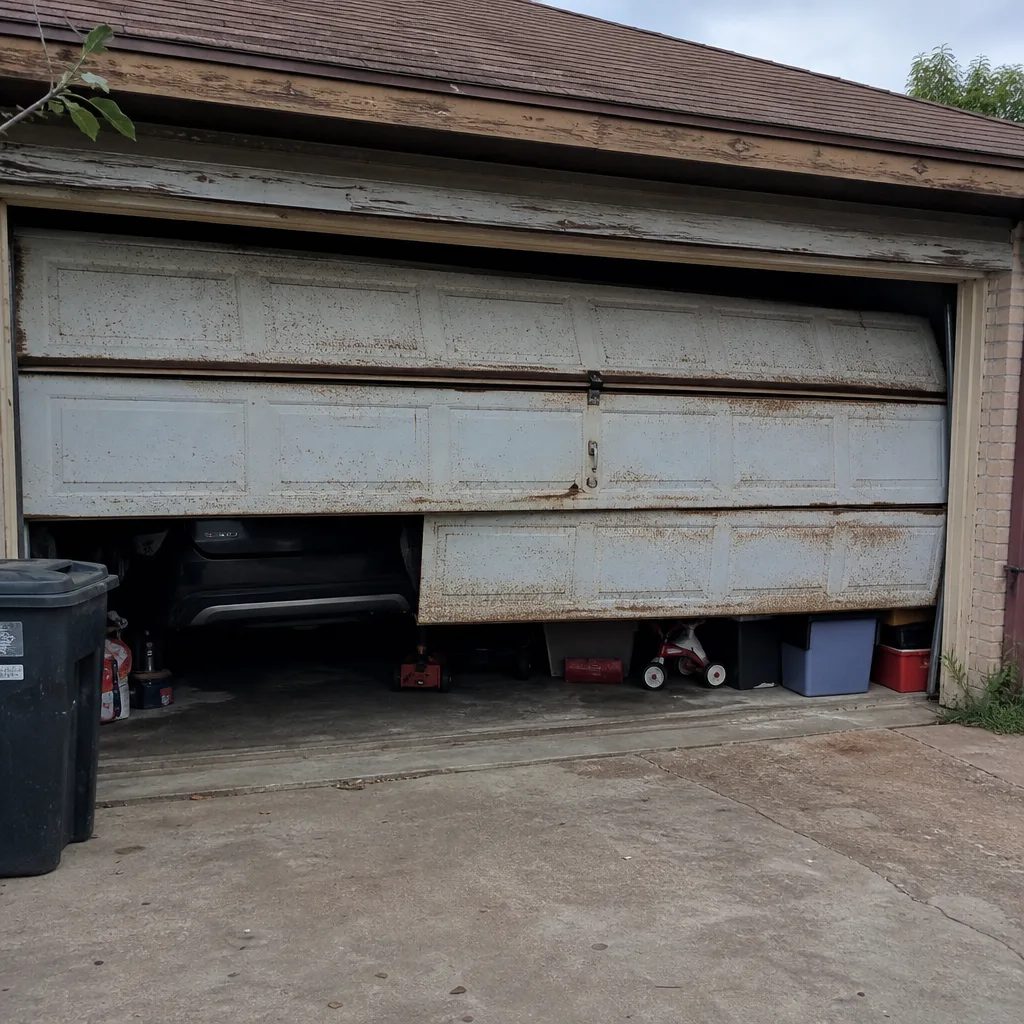 Before
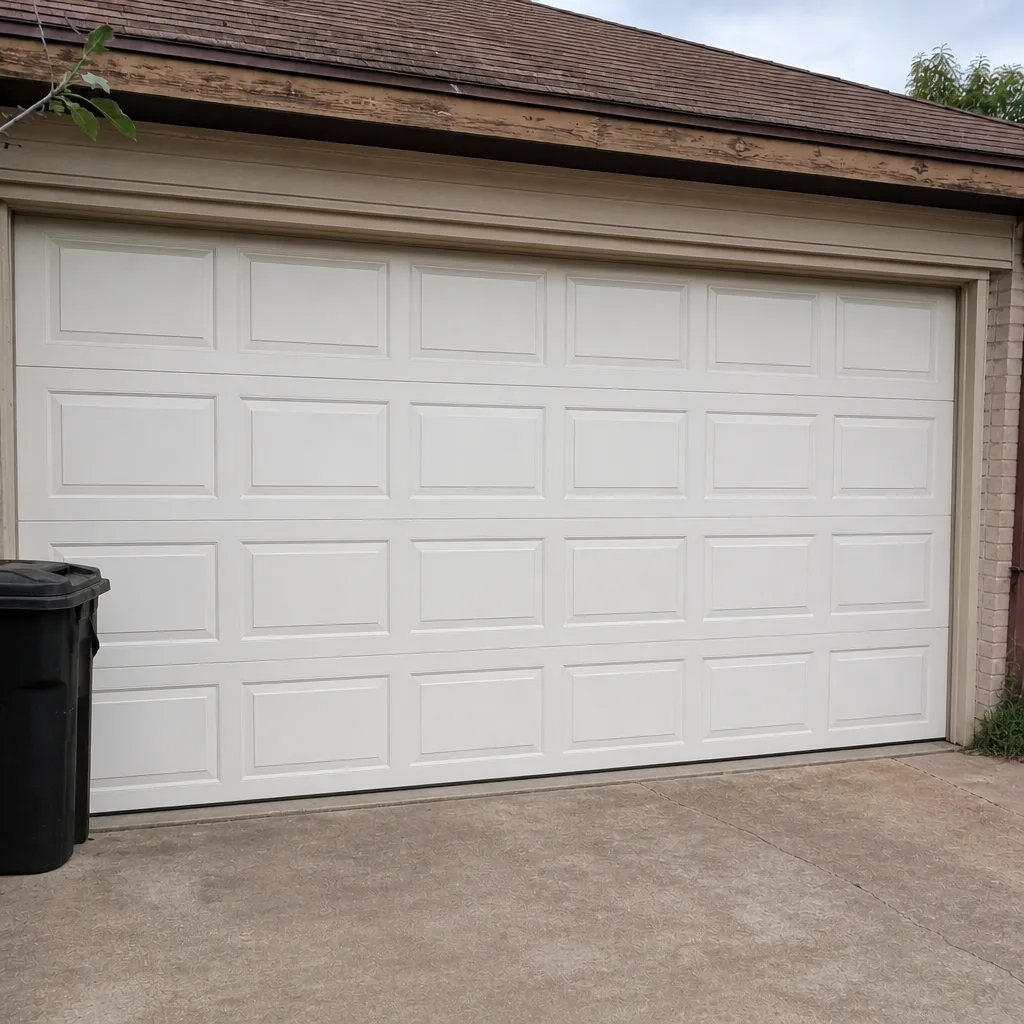 After
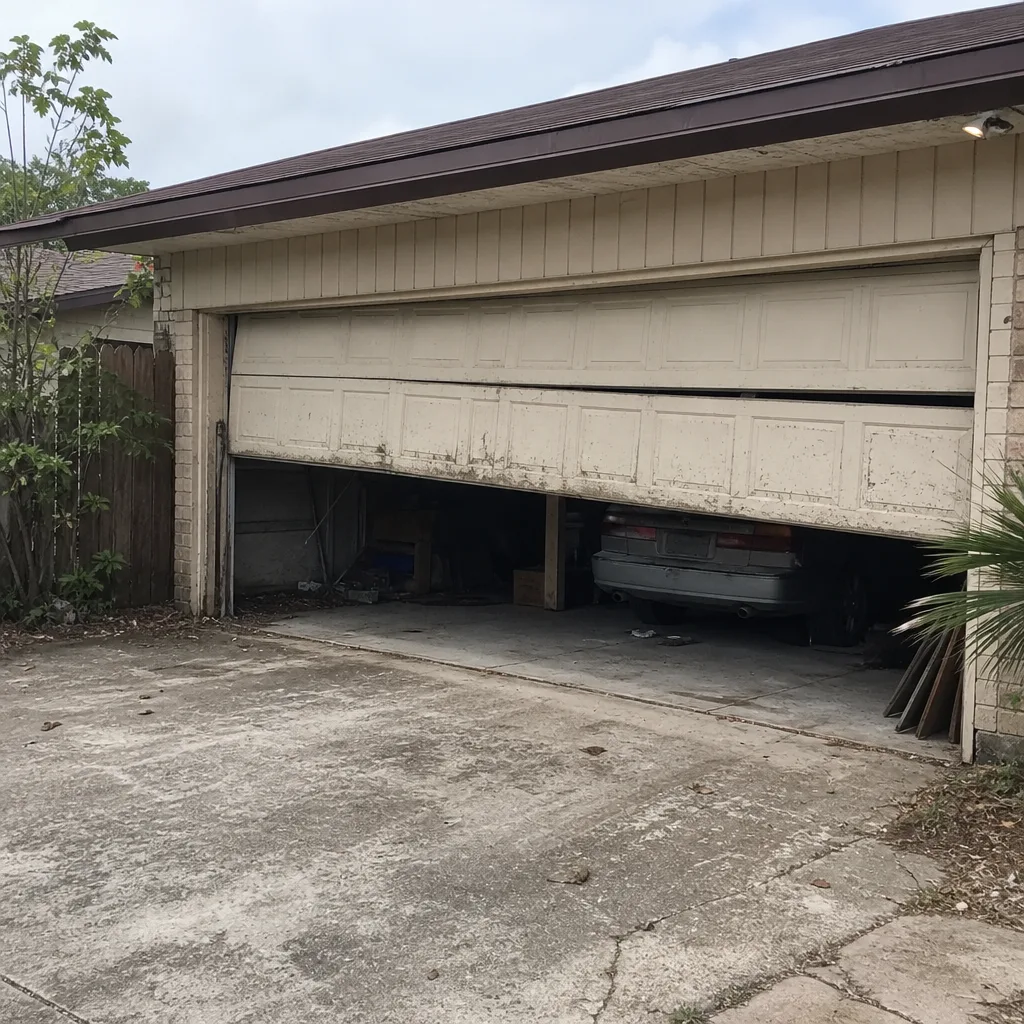 Before
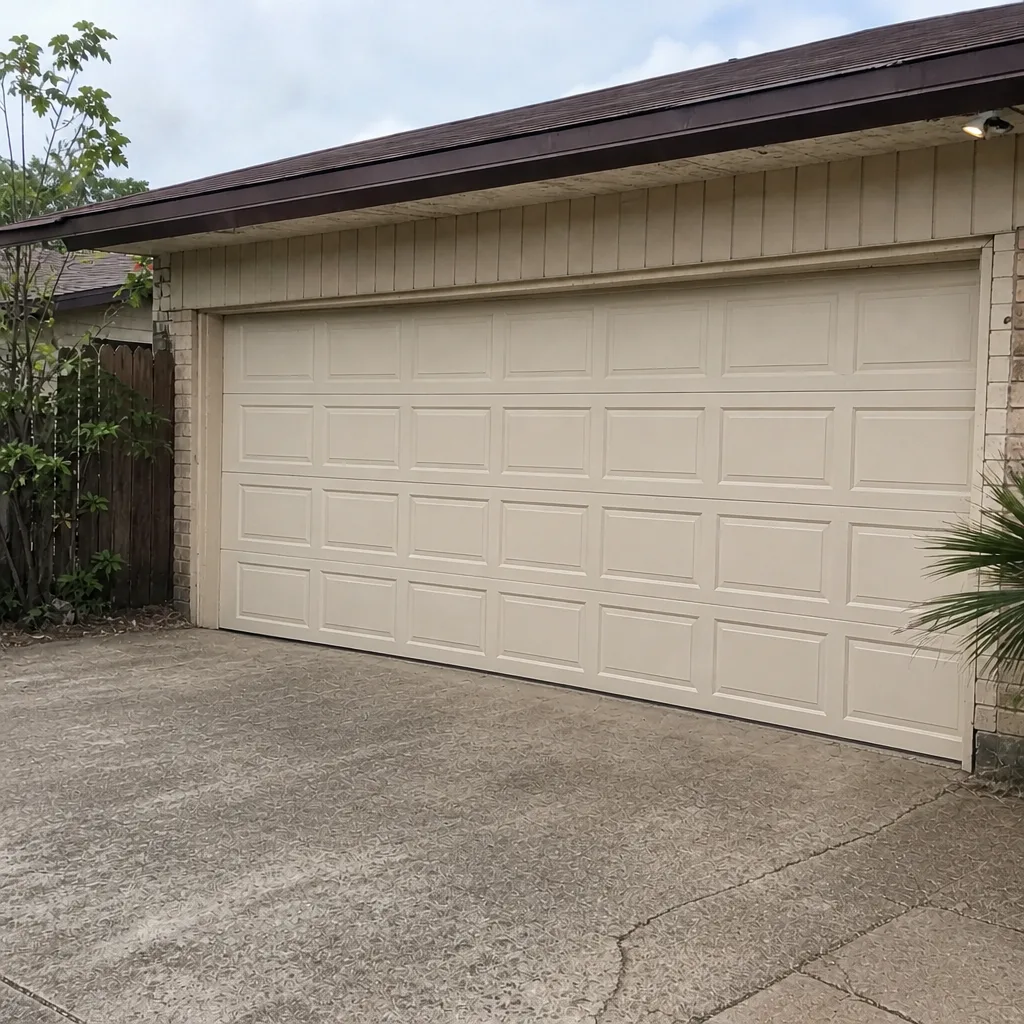 After
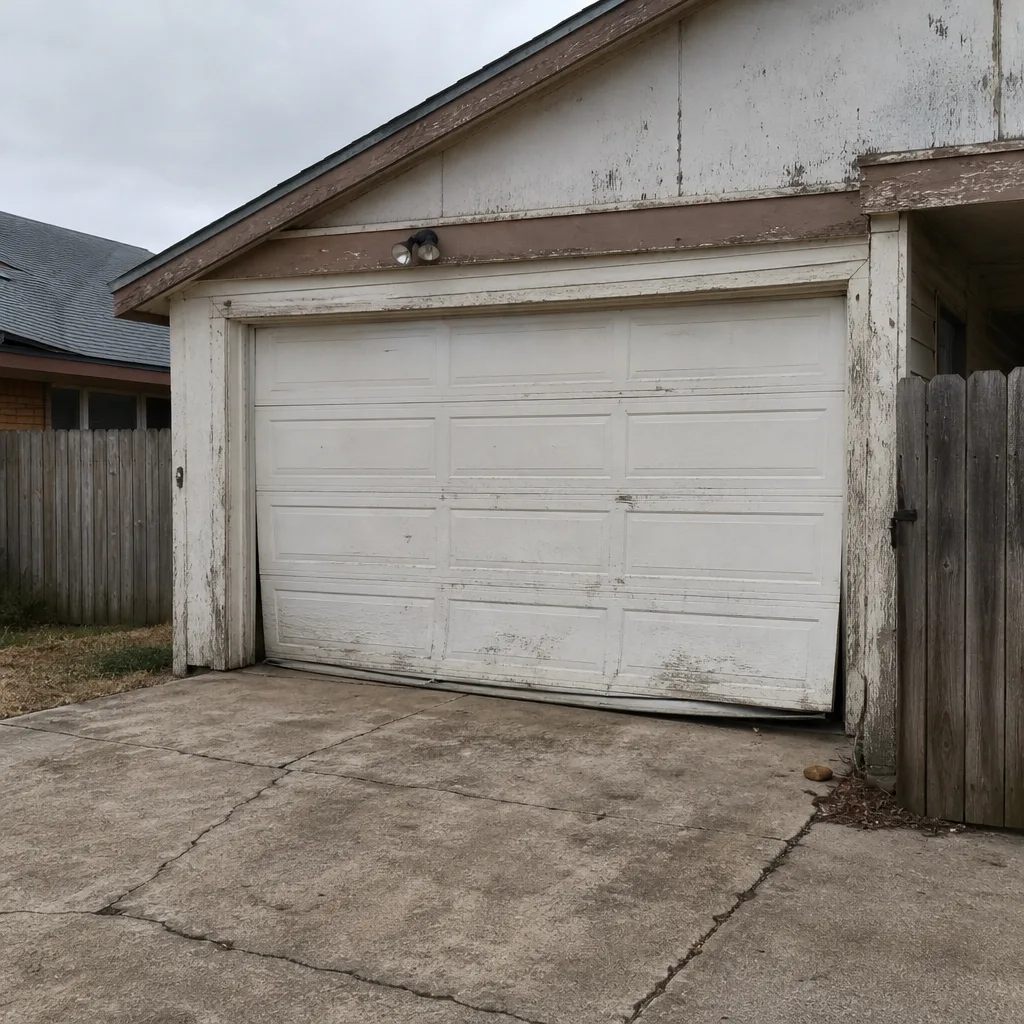 Before
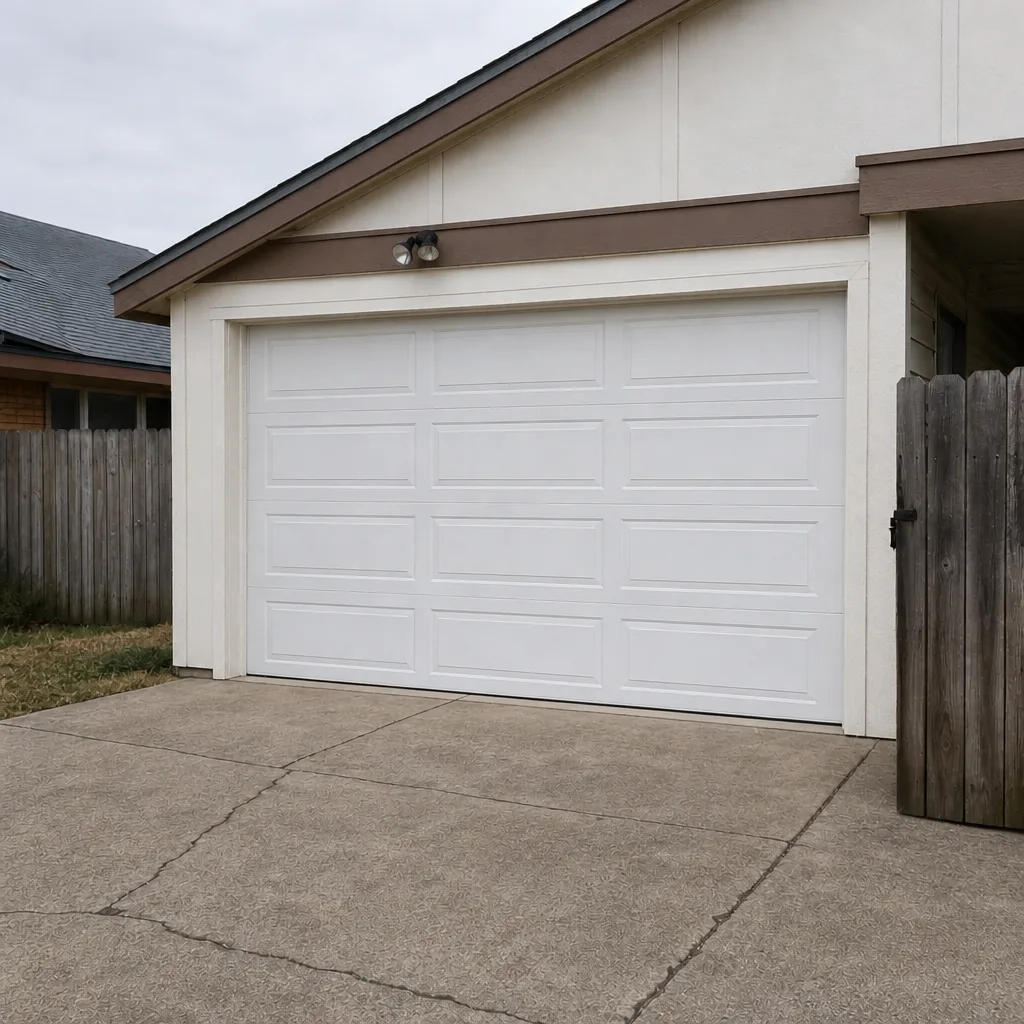 After
Common Mistakes to Avoid
- Skipping winter prep because “it doesn’t get cold here.” Edinburg’s cold snaps are brief but real, and the parts that fail are the ones ignored all year. The pre-freeze check is the highest-value habit on this list.
- Lubricating the tracks. A common mistake – tracks should stay clean and dry. Lubricant on the track attracts grit and makes the door slide poorly. Lubricate hinges and rollers, not the rails.
- Ignoring dust buildup. Grit left in the tracks after a dust storm grinds down rollers and hinges faster. A quick wipe-down after the storm saves a repair later.
- Force-closing a heavy door. A door that feels heavy in summer heat is a sign the spring is losing tension. Forcing it strains the opener and can damage panels; have the spring checked.
- Assuming the opener is the problem. A door that binds or reverses is often a track or balance issue, not an opener fault. Misdiagnosis costs money – a specialist checks the whole system.
- Letting a small seal leak go. A hardened or torn seal lets in water, dust, and pests through the rainy season. Replacing a seal is quick; fixing the damage it let in is not.
- Doing spring or cable work yourself. This is the one that lands people in the hospital. Springs and cables are high-tension parts; leave them to a trained technician.
When to Call a Professional
Some seasonal checks are yours to do; others are a call. Call us when the door won’t stay balanced, when a spring looks worn or the door feels heavy, when a cable is frayed or slack, when the opener reverses or struggles, when a track is bent or out of line, or when a panel is damaged after a storm. Those are the situations where a professional inspection saves you from a bigger failure.
Covenant Garage Door Repair offers free estimates in Edinburg – call (866) 389-4630. We answer 24/7. Fast dispatch from 7am to 7pm, Sunday through Friday. We’re a garage-door-only specialist, and the price is quoted and agreed before any work starts.
Frequently Asked Questions
Twice a year covers the basics for most Edinburg doors, with the important ones being a pre-freeze check in early fall and a post-storm inspection after dust or high winds. Add light checks after the rainy season for seals and any rust spots. A professional tune-up is worth it when something sounds or moves differently.
Yes, because it’s the parts that went ignored all year that fail on a cold night, not the cold itself. A dried-out seal, a seized hinge, or an aging opener set near its force limit can all give out when the temperature drops. A short pre-freeze check prevents most of it.
Wipe out the tracks, check cable condition for fraying or slack, look at the weatherstripping for tears, and glance at panel alignment. A quick listen for grinding tells you if grit got into the rollers. Leave any cable or track realignment to a technician.
Metal springs expand in heat, which shifts tension and can leave the door feeling heavier. That’s a sign the spring is doing less of its job, not a cue to force the door. Have it checked rather than running the opener against the extra load.
Often yes. Opener problems don’t keep regular hours, so call (866) 389-4630 – we answer 24/7. Fast dispatch from 7am to 7pm, Sunday through Friday. Dedicated opener repair is one of our three core services, so the diagnosis is focused rather than a guess.
Our technicians are state-licensed and insured, and our name means we stand behind every job. Our technicians have up to experience, and the price is set by a written estimate before any work starts. Call (866) 389-4630 for a free estimate.
The Bottom Line
Seasonal garage door care in Edinburg is less about four equal quarters and more about matching your checks to the weather that actually happens here. The short version: watch the opener and panel finish through the long summer, sort out seals, hinges, and balance before the winter freeze, inspect tracks, cables, and weatherstripping after dust and wind, and check seals and panel seams after the rainy season. Do the light checks yourself and call a professional for anything involving springs, cables, or opener internals. Two blocks on the calendar – the early-fall pre-freeze pass and the post-storm inspection – cover most of the risk.
When you’d rather have a technician look it over, Covenant Garage Door Repair offers free estimates in Edinburg – call (866) 389-4630. We answer 24/7. Fast dispatch from 7am to 7pm, Sunday through Friday. Garage doors are all we do, and the written estimate sets the price before any work begins.
Written by the team at Covenant Garage Door Repair.