
Last updated November 15, 2026
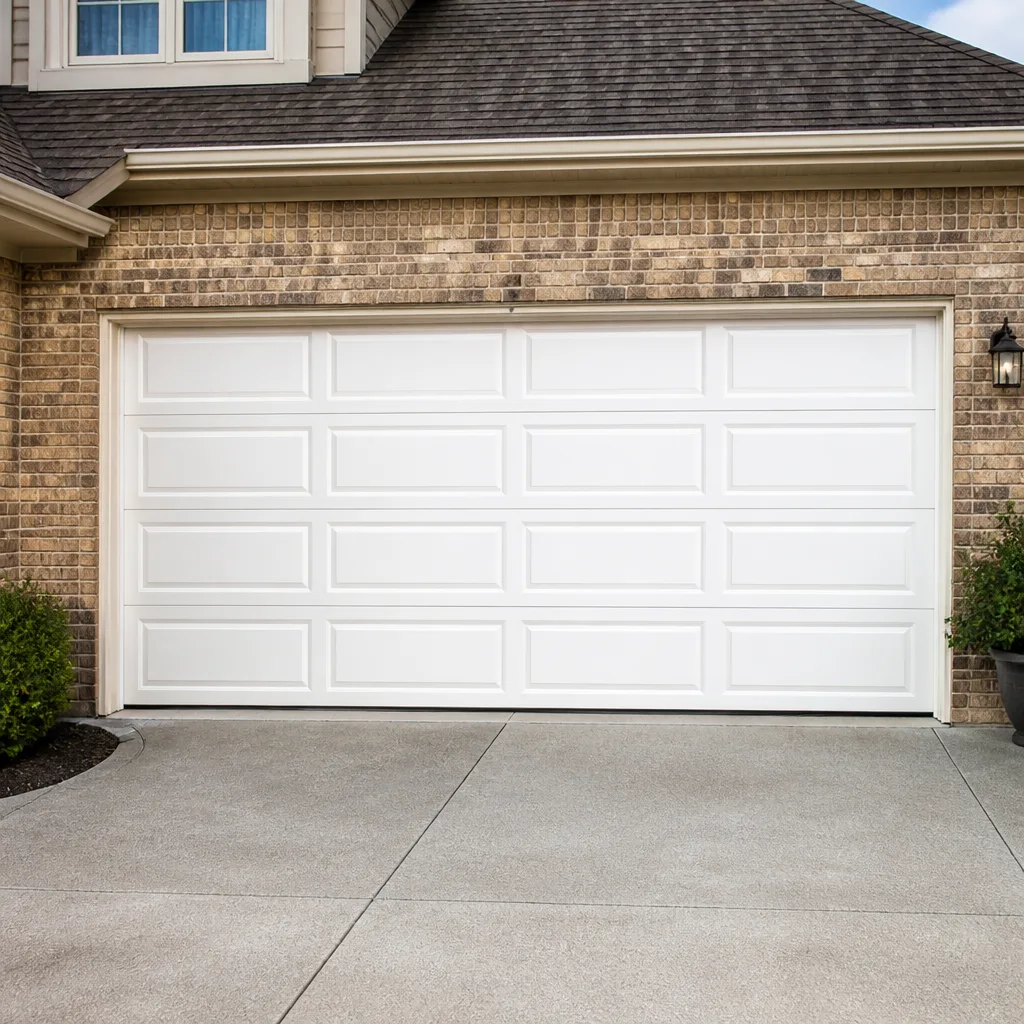 Raised-panel steel
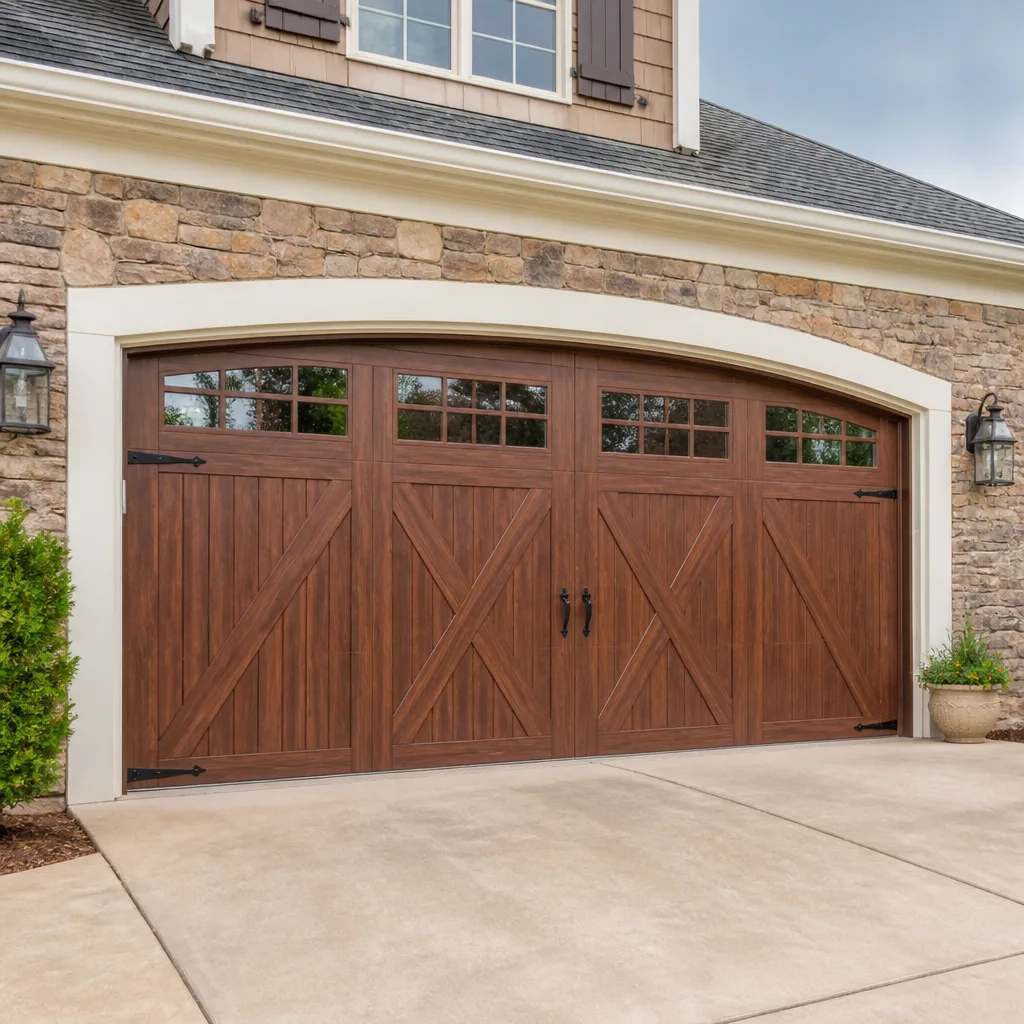 Carriage house
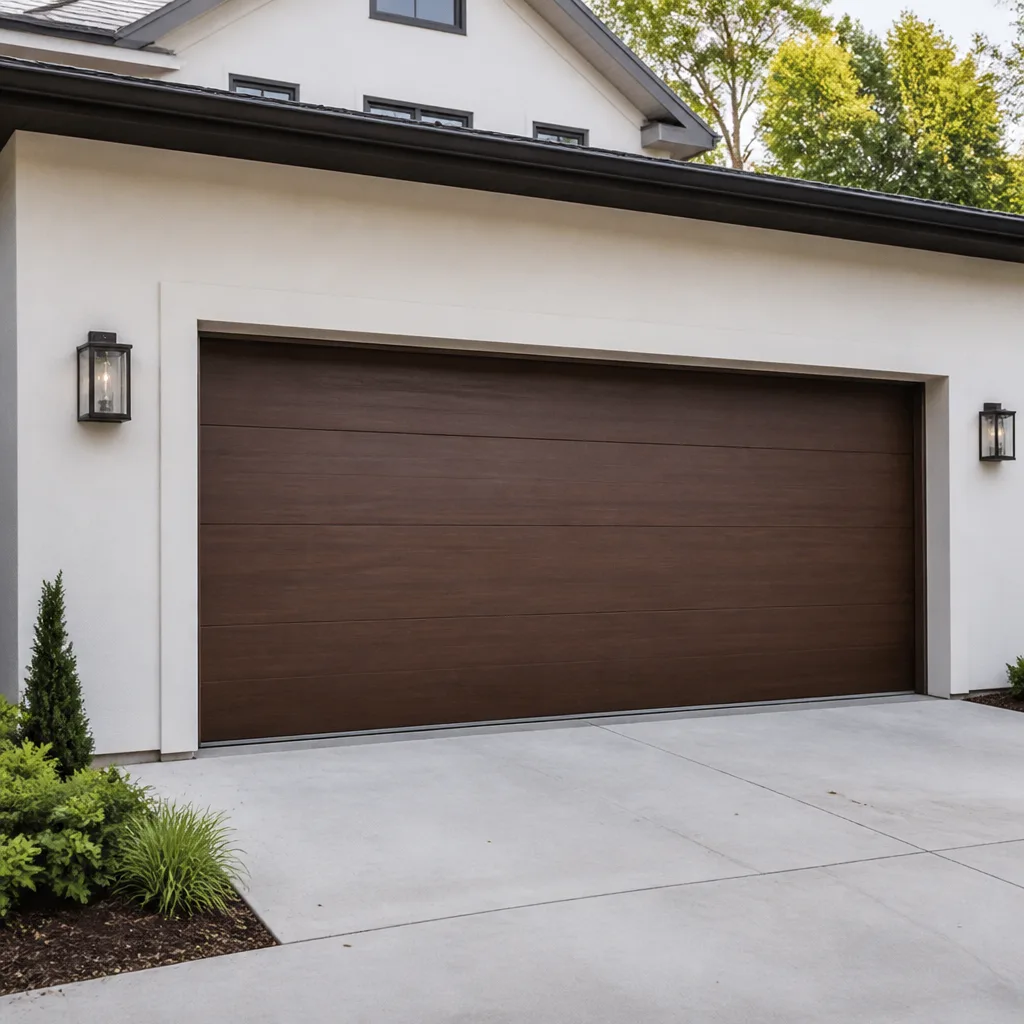 Modern flush
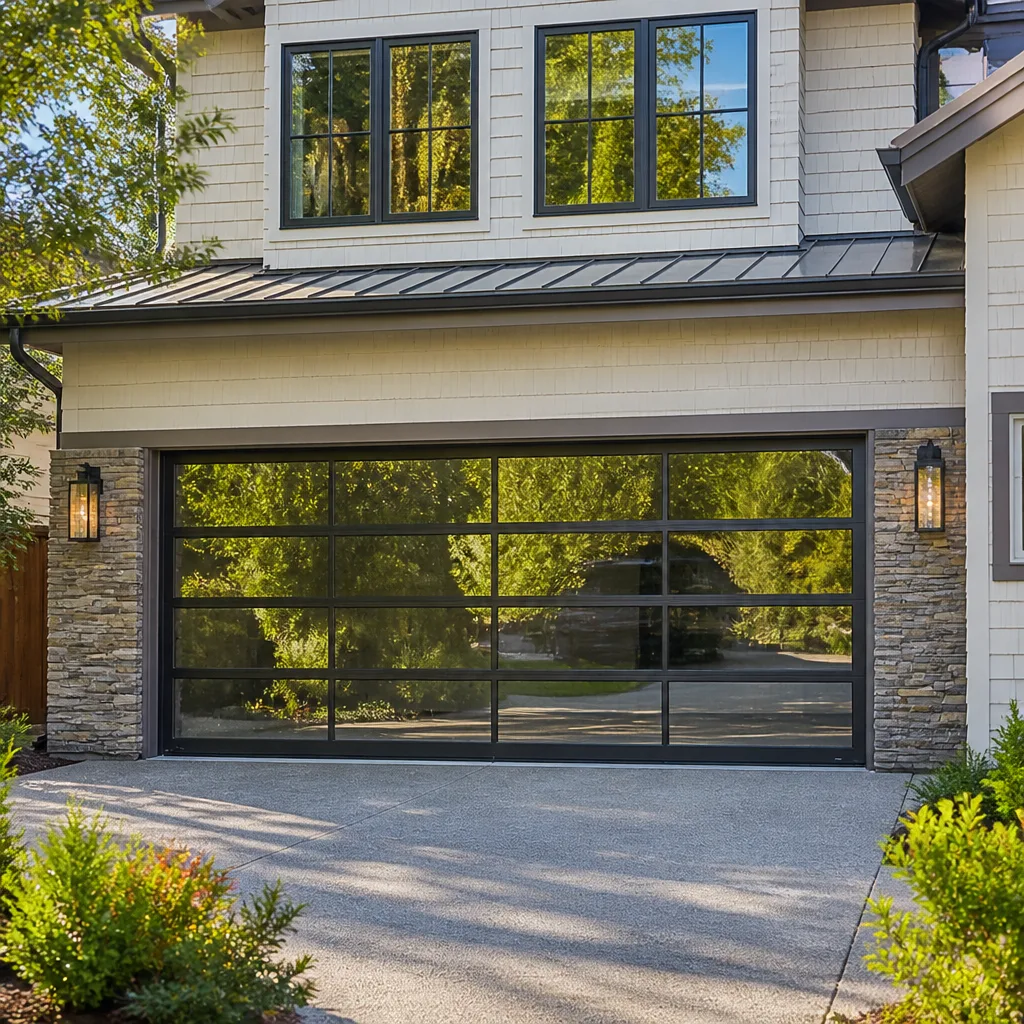 Full-view glass
 LiftMaster openers
 Chamberlain openers
Full 25-point door and opener safety check with every visit - springs, cables, rollers, tracks, and your LiftMaster or Chamberlain opener included
You get a price before we start. It does not change when the pro arrives.
Get your free estimateThe Complete Guide to Garage Doors in Edinburg
Most garage door advice you’ll read online was written for a climate that isn’t yours. It assumes four seasons, a snowy winter, and a house that sits in a temperate zone where garage doors live a fairly gentle life. Edinburg doesn’t work that way. Here, a garage door faces months of punishing heat, intense sun on west-facing panels, and a wind environment that shapes what the local building code expects of your door. The product that makes sense in Dallas or Houston is often the wrong specification for a Rio Grande Valley home.
This guide treats Edinburg as its own operating environment. You’ll learn how the heat stresses springs and opener motors, which door configurations actually match the housing here, what wind ratings mean outside hurricane season, and how to figure out whether your problem is the door, the opener, or the springs before you pick up the phone. Whether you’re maintaining an older door or planning a replacement, this is the reference we wish every homeowner had.
Quick Answer
A garage door in Edinburg needs a heat-rated spring system, a properly sized opener motor, and a wind-load rating that meets local code – because the Valley’s heat, sun exposure, and wind environment wear on doors differently than in temperate climates. The right specification depends on your door size, your housing type, and whether you’re in a converted carport garage or a newer subdivision home. If your door is sticking, noisy, or slow to respond, the cause is usually identifiable before a technician arrives.
Styles & brands we work with
- Raised-panel steel
- Carriage house
- Modern flush
- Full-view glass
- LiftMaster openers
- Chamberlain openers
Table of Contents
- How Edinburg Heat Affects Springs, Openers, and Panels
- Matching Doors to Edinburg’s Housing Types
- Wind-Load Ratings: What Edinburg Actually Requires
- What a Garage Door Really Costs: Delivered vs. Installed
- Door, Opener, or Spring? How to Tell Before You Call
- Typical Garage Door Repair Costs in Edinburg
- Opener Care and When Repair Beats Replacement
- Common Mistakes to Avoid
How Edinburg Heat Affects Springs, Openers, and Panels
Edinburg averages more than 100 days above 95°F each year. That single fact changes almost everything about how a garage door ages here compared with a national average. Springs cycle through expansion and contraction far more often, opener motors run hotter, and panel finishes take intense ultraviolet exposure on south- and west-facing doors. None of this is a scare tactic – it’s the ordinary physics of the place, and it’s why a door spec sheet written for a mild climate tells you only half the story.
Spring metal fatigue
Torsion and extension springs are rated in cycles, and standard springs are built for a certain number of open-close movements. In hot climates, spring metal fatigues faster because the metal is operating closer to its thermal limits for more of the year. A spring that would last many years in a temperate garage may give out sooner in an Edinburg garage that faces the afternoon sun all summer. The practical takeaway: ask for a spring rated for high-cycle use, and understand that a matched pair should be replaced together. When one spring fails, the second is usually at the same point in its life.
Opener motor load
Chain-drive and screw-drive openers run hotter and harder when the garage itself is baking. A motor that’s even slightly undersized for a double-car door will strain more here. Belt-drive openers run quieter and smoother, which matters on larger doors. If your opener is cutting out, reversing for no reason, or struggling to lift the door, the heat is worth suspecting right alongside the door’s balance and the spring tension.
Panel warping and finish breakdown
Steel and aluminum panels expand in heat. On a west-facing door, repeated daily expansion and contraction loosens the finish and can reveal warping at the panel edges over time. Insulated doors hold their shape better, and lighter panel colors reflect more heat. A garage door that faces the sun in Edinburg benefits from an insulated panel core and a light color far more than the same door would in a cooler market.
Matching Doors to Edinburg’s Housing Types
Edinburg’s housing stock is more varied than a national guide would guess, and the door that fits one type of home can be a poor choice for another. Three configurations come up most often, and each has its own considerations.
Converted carports
A lot of older Edinburg homes started life with an open carport that was eventually enclosed into a garage. These conversions often have non-standard opening sizes, modest header heights, and framing that was never designed for a heavy sectional door. A door installed on a converted carport needs careful measurement of the actual opening, honest assessment of the header and track mounting points, and usually a lighter door or a different track configuration. Retro-fitting a door meant for new construction onto a converted carport is where a lot of headaches begin.
Newer master-planned subdivisions
The newer subdivisions around town tend to have standardized single- and double-car openings and more consistent framing. Homeowners here are often choosing between a builder-grade door and an upgrade. The main decisions are insulation, panel style, and opener choice. Because the openings are standardized, this is the easiest housing type to specify a door for – you have real choices, and the doors from a manufacturer like Amarr or Wayne Dalton fit these openings cleanly.
Older ranch-style homes
The older ranch homes that make up much of the established housing in and around Edinburg bring a different set of issues: doors that have been repaired several times, openers past their service life, and tracks that have shifted over the years. On these homes, the question is often whether to keep repairing or to plan for a replacement. A door that’s been patched repeatedly and has a failing spring system alongside worn tracks is usually telling you it’s time to talk about a new one.
- Converted carport: measure the true opening, plan for lighter or differently tracked doors
- New subdivision: standardized openings, focus on insulation and opener quality
- Older ranch home: weigh ongoing repairs against replacement
Wind-Load Ratings: What Edinburg Actually Requires
Wind-load ratings matter in Edinburg even when there’s no storm on the radar. The Rio Grande Valley’s wind environment shapes local building code requirements for garage doors, and a door that meets spec in a calm inland market may not meet the standard here. A garage door is one of the largest openings in your home’s exterior envelope, and it needs to hold under wind pressure the same way your roof and walls do.
Wind-load ratings describe how much pressure a door and its hardware can withstand. Doors are tested and labeled against specific ratings, and the ratings are tied to the door’s size, its reinforcement, and the hardware that holds it in the opening. This is why a door and its hardware can’t be judged separately – a strong panel on weak reinforcement is still a weak assembly.
What does this mean in practice for an Edinburg homeowner?
- When replacing a door, ask for the wind-load rating and confirm it meets your local building department’s requirement for your home’s location and exposure.
- Understand that ratings are tied to the full assembly – door, hinges, tracks, and mounting.
- If your current door predates current standards or was never rated, that’s a conversation worth having before it becomes a problem.
- For any door replacement or structural work, check with the city’s building department on what permits and ratings apply to your specific property.
We’re not going to hand you a code section number – those requirements live with the city, and they can vary by property. What we can tell you is that ignoring wind rating in the Valley is a choice you’ll eventually regret. If you’re unsure what standard applies to your home, the building department is the right place to ask, and we’re happy to talk through what a compliant door looks like.
What a Garage Door Really Costs: Delivered vs. Installed
Here’s where a lot of Edinburg homeowners get surprised. The price on a big-box store’s door isn’t the price of your door. A boxed door bought off the floor and delivered to your driveway is a collection of parts. What actually goes into your garage opening is a measured, assembled, aligned, and tested system – and the gap between the two numbers is real.
What’s in the box price
A retail door price typically covers the panels, the basic hardware kit, and the springs sized for a typical application. It does not cover the correct spring size for your door’s actual weight, the track configuration your opening needs, or the labor to assemble, hang, and balance it. When a big-box door is priced out honestly including installation, the total usually lands closer to what a properly specified installation costs – and with a real installer, you get the right spring for the door, not the spring that happened to ship in the box.
What a proper installation includes
- Accurate measurement of the actual opening, not the nominal size
- Springs sized to the door’s real weight and cycle rating
- Track configuration matched to the opening and header
- Balancing and travel-limit adjustment so the opener isn’t straining
- Safety reversal testing and reinforcement for wind rating where required
When we quote an installation, the price is set by a written estimate and agreed before any work starts. That estimate reflects the door you choose, the springs for your actual door, the hardware, and the labor. It’s a free measure and a written price, not a verbal guess. If you’re comparing a delivered door against an installed price, compare the full job, not just the box.
Door, Opener, or Spring? How to Tell Before You Call
Most garage door problems announce themselves with a symptom that points to one of three systems. Knowing which one you’re dealing with helps you describe the problem clearly and helps you understand what the fix will involve. Here’s the diagnostic order we use.
- Listen to the motor. If you hear the opener running but the door doesn’t move, the opener is likely fine and the problem is the door’s mechanical connection or a broken spring. If the opener hums and strains but the door barely moves, suspect spring or balance trouble alongside the opener.
- Test the door by hand. Disengage the opener (most have a release cord) and lift the door manually. A properly balanced door lifts smoothly and stays put partway up. A door that feels very heavy or slams down is unbalanced – that’s a spring issue, and it’s a professional job.
- Watch the door’s travel. A door that goes up crooked, binds on one side, or derails from the track has a track or panel alignment problem. A door that reverses for no reason often has an opener sensor or travel-limit issue.
- Check the opener’s response. If the door only opens when you hold the button, or the remote works intermittently, that points to the opener or its safety sensors rather than the door itself.
One hard safety note before you go further: torsion springs and the cables under tension are the most dangerous parts of any garage door system. Never try to adjust, remove, or replace a spring or cable yourself. Those components are under extreme tension, and the injuries from DIY attempts are severe. If your diagnosis points to the springs, stop and call a trained professional.
If you’ve narrowed it down to the mechanical side, our garage door repair team can take it from there. If the door itself is fine but the motor or remotes are misbehaving, that’s garage door opener repair, which we treat as its own discipline rather than lumping it into general repair.
Typical Garage Door Repair Costs in Edinburg
Repair pricing in Edinburg reflects the same heat-driven wear that shapes everything else here. Below are typical estimated ranges, not exact prices. Every job is different, and the written estimate you receive sets the final price. These are for one spring or one component; a matched pair of springs is usually replaced together and costs about twice a single spring.
| Repair | Typical Estimated Range |
|---|---|
| Single torsion spring replacement | $180 – $340 |
| Matched pair of springs (both replaced together) | About twice the single-spring range |
| Opener repair (board, sensor, or motor issue) | Quoted per job after diagnosis |
| Track realignment or roller replacement | Quoted per job after inspection |
What drives the number up or down? Door size and weight, the spring rating you choose, and whether the hardware has been neglected long enough that more than one part needs replacing. A door that’s been noisy and slow for months often needs springs plus rollers, not just one part. The estimate is free, and the price is quoted and agreed before any work starts. You’ll never get an invoice that’s bigger than the written estimate because we found something extra along the way – if we find something, we tell you before we do it.
For an exact quote on your door, call (866) 389-4630. Estimates are free.
Opener Care and When Repair Beats Replacement
An opener is a small motor doing hard work in a hot box. In Edinburg, that heat load shortens the life of the electronics and the drive system faster than in cooler climates. The good news is that opener problems are often repairable, and replacement isn’t always the right call.
What to check first
- Safety sensors: misaligned or dirty sensors are the single most common “my door won’t close” cause. A small LED on each sensor tells you if they’re aligned and seeing each other.
- Remotes and wall button: if the wall button works but the remote doesn’t, the problem is the remote or its programming, not the opener.
- Travel limits and force settings: an opener that reverses partway up or stops short often needs its limits adjusted, not replaced.
- Battery backup: many modern openers from LiftMaster, Chamberlain, and Genie carry battery backup; a dead backup battery can cause odd behavior.
Repair or replace?
The honest answer depends on the opener’s condition and the door it’s lifting. A well-built opener that’s struggling only because the door is unbalanced doesn’t need replacing – it needs the door fixed. An older opener with a failing logic board, an unavailable replacement part, or a motor that’s genuinely worn out is usually a replacement candidate. We service LiftMaster, Chamberlain, Genie, and Craftsman openers regularly, along with doors from Amarr, Wayne Dalton, and Raynor, so we can diagnose across brands rather than pushing whatever we happen to stock.
If your opener is the problem, that’s a job for a specialist who works on openers all day, every day. It’s why we treat garage door opener repair as a standalone service rather than an afterthought.
Common Mistakes to Avoid
- Buying a door rated for a temperate climate and assuming it fits Edinburg. Heat and sun exposure here demand insulation and finish choices that a generic spec sheet won’t recommend. Ask specifically about heat performance and panel color before you buy.
- Replacing one spring when both are at the same age. A matched pair should be replaced together. Replacing one spring leaves you back in the same spot within weeks, and the second spring fails under the same conditions.
- Ignoring wind-load rating because it’s not hurricane season. The rating is a permanent building-code consideration, not a seasonal one. A door that isn’t rated for the local wind environment is a door that doesn’t meet the standard your home should be held to.
- Comparing a big-box door price to an installed price. The delivered door price leaves out springs sized for your door, correct track, and installation labor. Compare the full job, not the box.
- Straining an undersized opener on a heavy door. In Edinburg’s heat, an undersized motor wears out fast. Match the opener to the door’s actual weight, especially on double-car and insulated doors.
- Attempting spring or cable work yourself. Torsion springs and cables are under extreme tension and cause serious injuries. This is the one part of garage door work that should never be a DIY project.
- Putting off a door that’s been noisy and slow for months. In this climate, small problems compound. A door that’s been telling you something is wrong usually needs more parts replaced the longer you wait.
See the difference
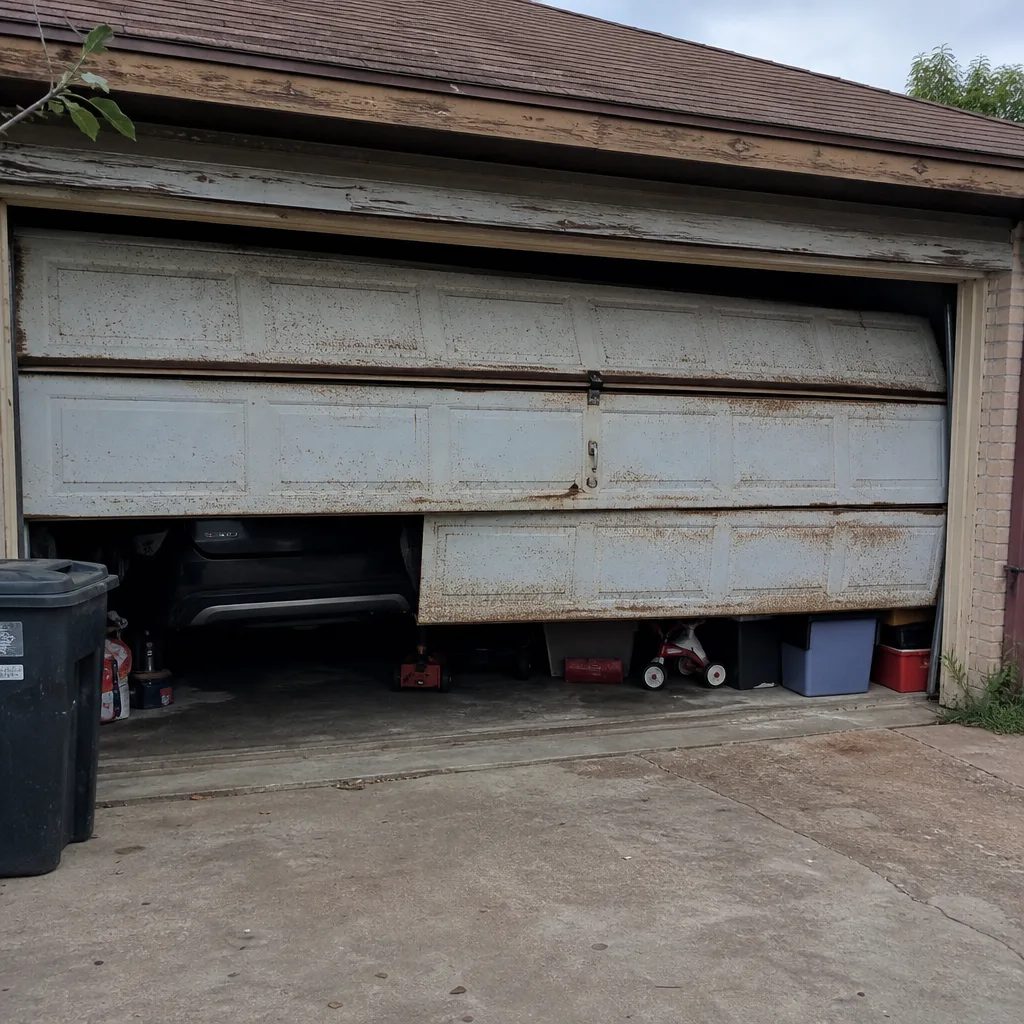 Before
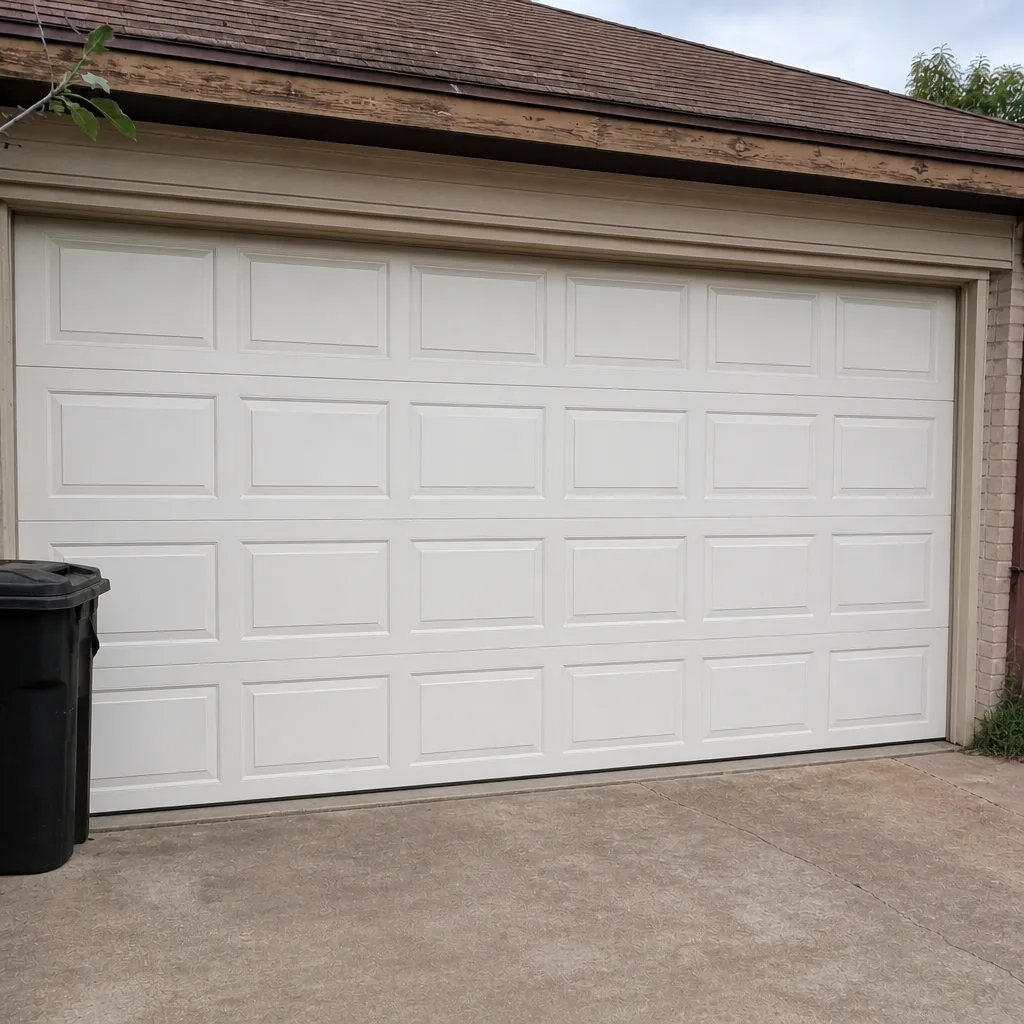 After
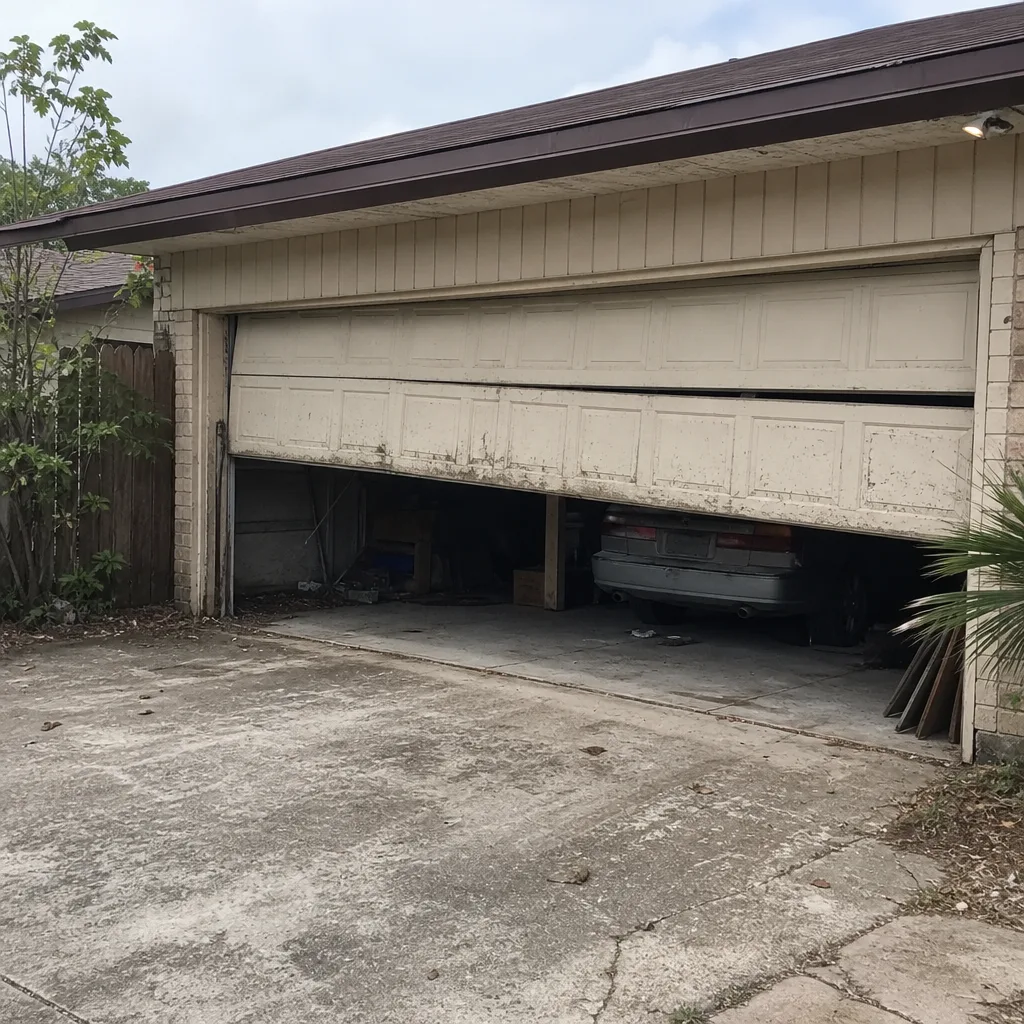 Before
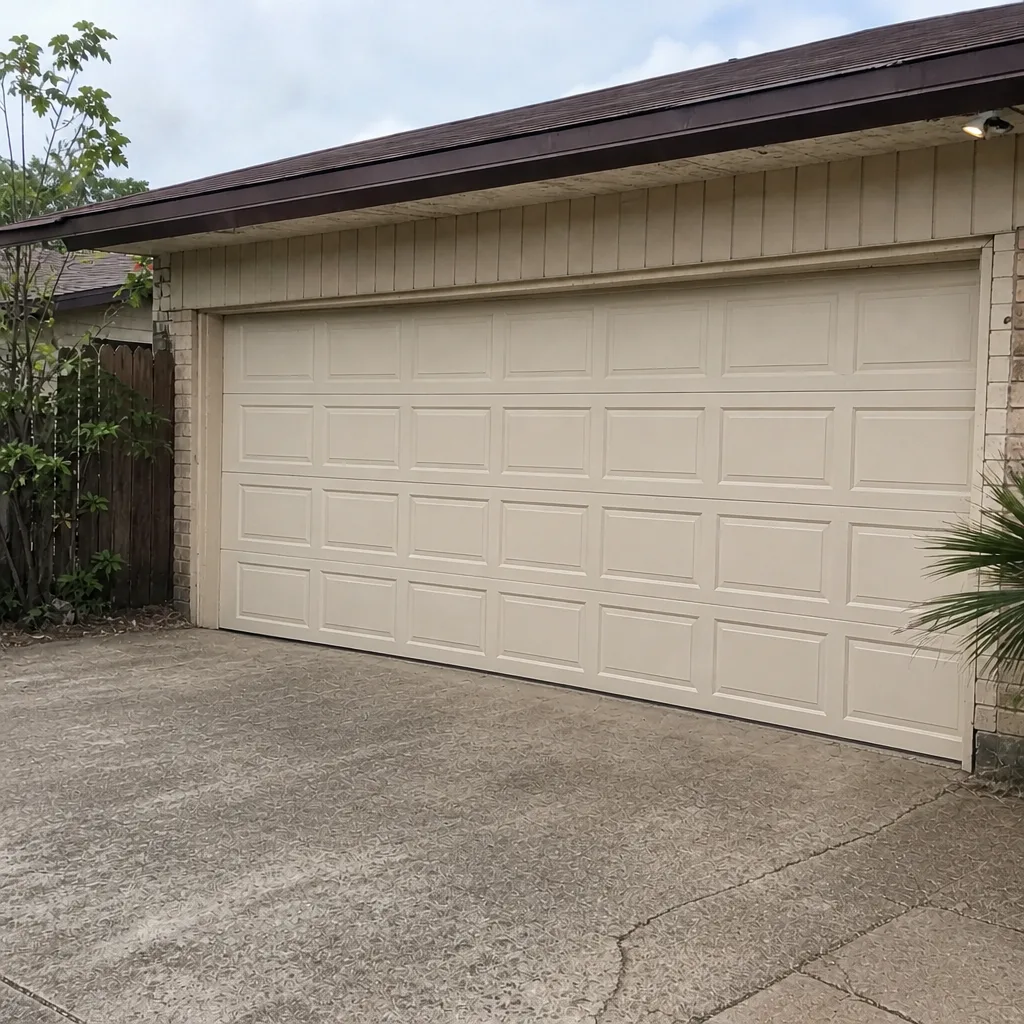 After
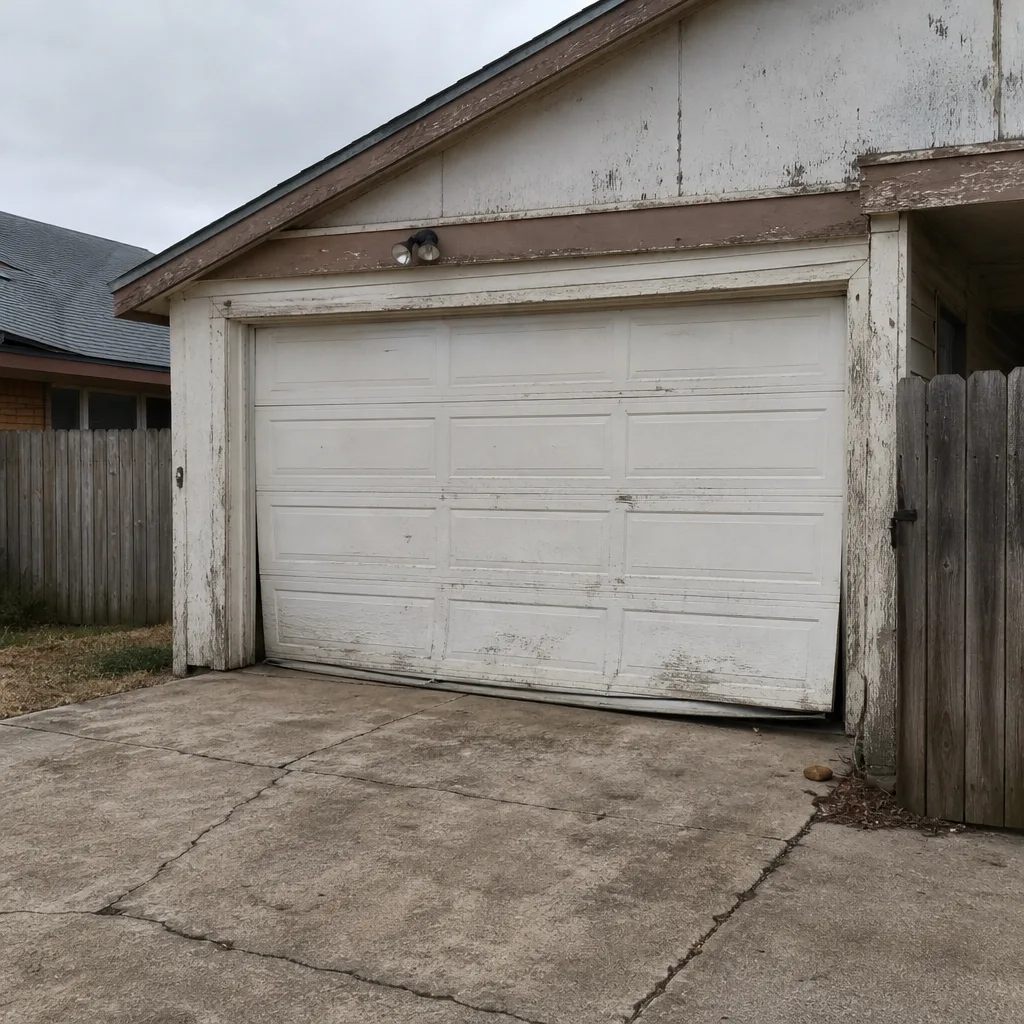 Before
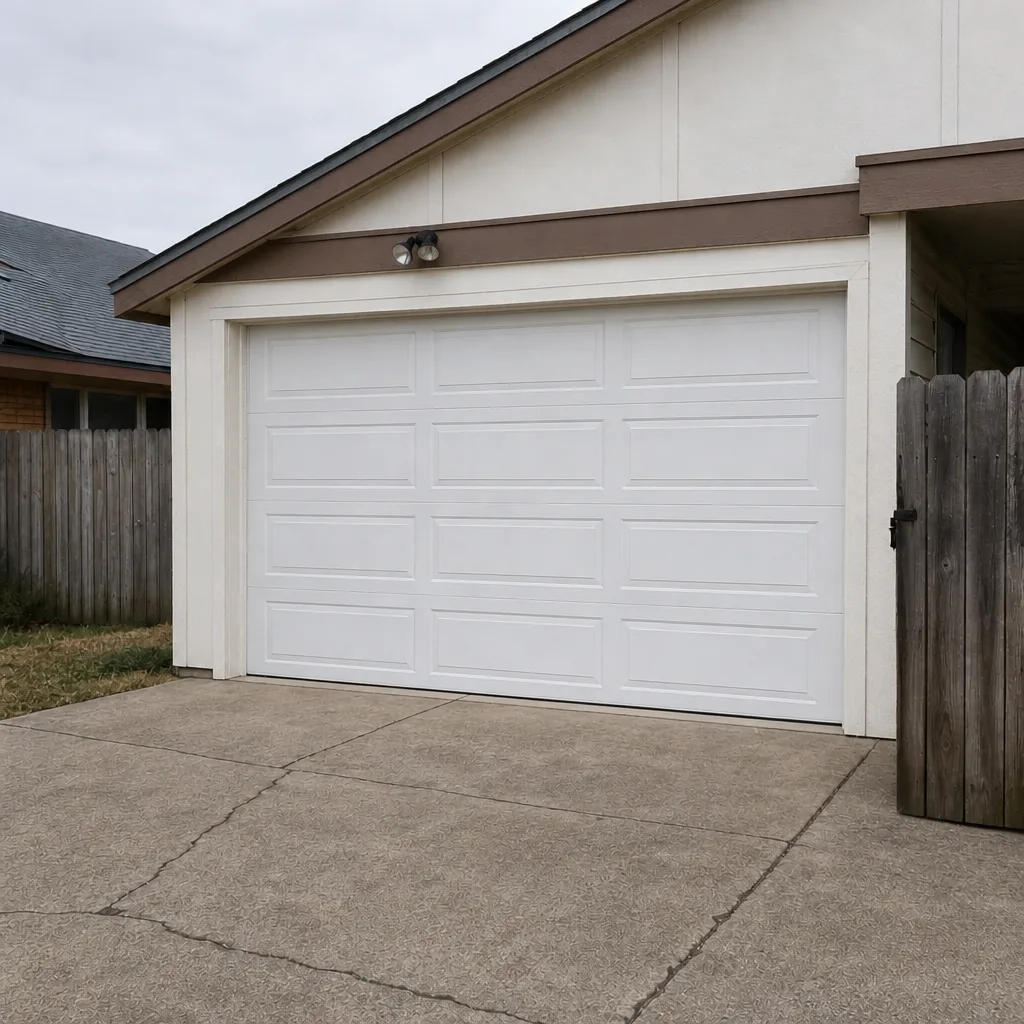 After
When to Call a Professional
Some jobs are genuinely fine to handle yourself, and some are not. Call a trained professional when:
- A spring breaks or the door slams down or feels extremely heavy
- The door comes off its track or goes up crooked
- The opener strains, hums without lifting, or reverses for no clear reason after you’ve checked the sensors
- The door is more than a decade old and has had repeated repairs
- You’re replacing a door and need correct wind-load rating and hardware
Springs, cables, and the torsion system under tension are the danger zone – never attempt those yourself. For those cases, and for anything you’re unsure about, a trained technician is the right call. At Covenant Garage Door Repair, we offer free estimates in Edinburg – call (866) 389-4630. We answer 24/7. Fast dispatch from 7am to 7pm, Sunday through Friday. Same-day service is often available for repairs.
Frequently Asked Questions
A single torsion spring replacement in Edinburg typically falls in the $180 – $340 range. Because springs are usually replaced as a matched pair, a full pair costs about twice that. Call (866) 389-4630 for an exact quote – estimates are free.
Often, yes. Most spring, track, roller, and opener repairs can be handled the same day when you call during dispatch hours. We answer 24/7. Fast dispatch from 7am to 7pm, Sunday through Friday. Call (866) 389-4630 to get on the schedule.
No. The written estimate you receive is the price, and it’s agreed before any work starts. If we discover something additional during the repair, we tell you before we do it – you won’t get a surprise invoice. Call (866) 389-4630 for a free estimate.
Yes. Our technicians are licensed and insured, and they have up to experience across the eight major brands we service, including LiftMaster, Chamberlain, Genie, Clopay, Amarr, Wayne Dalton, Craftsman, and Raynor. Call (866) 389-4630 with questions.
Edinburg’s extreme heat pushes spring metal closer to its thermal limits for more of the year, so springs fatigue faster than in temperate climates. Higher-cycle-rated springs and matched-pair replacement help offset this. Call (866) 389-4630 if you suspect a failing spring.
Most door replacements and structural work require a permit, and the rules can vary by property. Check with the City of Edinburg’s building department on what applies to your home. For a free measure and written estimate on a replacement, call (866) 389-4630.
The Bottom Line
A garage door that’s specified for Edinburg’s heat, wind environment, and housing type performs better, lasts longer, and costs less over time than one spec’d for a national average. That means a heat-rated spring system, an opener sized correctly for the door, insulation and finish chosen for the sun, and a wind-load rating that meets local code. When something goes wrong, diagnose whether it’s the door, the opener, or the spring before you call – and never touch the springs yourself. Covenant Garage Door Repair works on garage doors only, across the major brands, with a name that means we stand behind every job. We’re the Covenant Garage Door Repair team, and we’re here when your door isn’t. If you’re in Edinburg and need a free estimate, call (866) 389-4630. We answer 24/7. Fast dispatch from 7am to 7pm, Sunday through Friday.
Written by the team at Covenant Garage Door Repair.